How Desperate are You?
 “Doubt is a half way stage between faith on the one hand and disbelief on the other. ” – Os Guiness
He goes on to say “it is a half way stage that needs to be resolved. One goes back to faith or onto disbelief. ”
Doubt in itself is not a bad thing. It has the potential to destroy your Easter experience (which I will explain later). Many struggle with doubt and don’t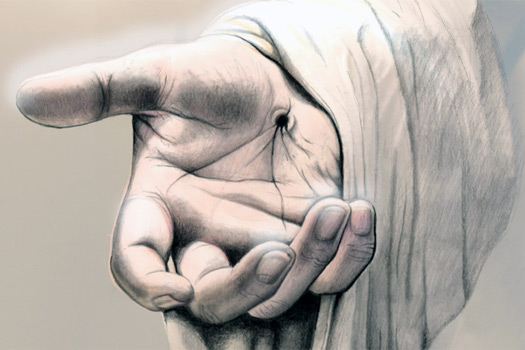 know what to do with it and wonder if it is okay to doubt. The question is not whether or not doubting is okay. The question is – what is causing you to doubt.
There is something that creates that doubt. The key is finding out what is causing the doubt and deal with what caused it so that your faith can move forward. Doubt can be created by a lot of things: a past experience that created a psychological scar, a lack of foundation in your belief system or lack of confidence that God will do what he says he will do.
Back in 2010, my in-laws took my family to Hawaii. We had some incredible experiences – ones I will never forget. One particular experience that really got my heart beating fast was zip lining. I heard about zip lining. I had watched zip lining on YouTube. I was a bit scared. But I thought you only live once. “I’m doing it.”
 When we got to the first platform I sensed my next to youngest daughter was really scared. Her and I was the last to go. I did whatever good dad does …. I played the bad guy – I yelled and got in her face that she needed to do it. I told her, “she would regret it later in life if she didn’t do it if she didn’t do it today.” I added , “you may never get this opportunity to do it again.”
Here is the recording of the four minute interview
If you listened, you discovered she was at the half way point. She saw all of us harness up and jump and land safely. I knew she could it but she doubted she could do it. When she finally did it …. all doubt was resolved. Her faith kicked into gear and she was the first to jump on the next zip line.
Like I mentioned earlier, doubt is not a bad thing. In fact you can’t have faith without  having doubts. Faith is birthed from our doubts if we confront what is causing our doubts.
Thomas, or affectionately known as “doubting Thomas”, gets a bad wrap for not initially believing that Jesus had risen from the dead.
Listen to his story found in John 20:19-29,
19 That Sunday evening the disciples were meeting behind locked doors because they were afraid of the Jewish leaders. Suddenly, Jesus was standing there among them! “Peace be with you,” he said. 20 As he spoke, he showed them the wounds in his hands and his side. They were filled with joy when they saw the Lord! 21 Again he said, “Peace be with you. As the Father has sent me, so I am sending you.” 22 Then he breathed on them and said, “Receive the Holy Spirit. 23 If you forgive anyone’s sins, they are forgiven. If you do not forgive them, they are not forgiven.”
24 One of the twelve disciples, Thomas (nicknamed the Twin), was not with the others when Jesus came. 25 They told him, “We have seen the Lord!”
But he replied, “I won’t believe it unless I see the nail wounds in his hands, put my fingers into them, and place my hand into the wound in his side.”
26 Eight days later the disciples were together again, and this time Thomas was with them. The doors were locked; but suddenly, as before, Jesus was standing among them. “Peace be with you,” he said. 27 Then he said to Thomas, “Put your finger here, and look at my hands. Put your hand into the wound in my side. Don’t be faithless any longer. Believe!”
28 “My Lord and my God!” Thomas exclaimed.
29 Then Jesus told him, “You believe because you have seen me. Blessed are those who believe without seeing me.”
What happened to Thomas after this scene with Jesus?
Biblical history tells us he went to be a missionary in India. Thomas preached to the Parthians, the Medes, the Persians, Hyrcanians, Bactrians, and Margians. Thomas became a martyr of the Christian faith. He was thrust through all four members of his body with a pine spear in India. He was buried there.
Once Thomas had put his fingers in the holes of his hands and hole in his side, he shouted, “my Lord and my God.” Thomas just had an Easter experience. After that experience, Thomas jumped off the missionary zip line and went on a spiritual adventure of a life time. His belief turned into action. His action turned into faith.
Thomas wasn’t the only who was unable to believe. Initially, the other disciples were unable to believe either. They didn’t believe Mary when she came running and told them that the tomb was empty. This tells me the disciples weren’t really expecting him to rise from the dead – no one had ever done that before. Mark 16:11 tells us,
“when they heard that Jesus was alive …. They did not believe it.”
Could you blame them for not believing it? If you had been there, would you have been able to believe it? Me, personally, would have had an extremely difficult time believing it actually happened.
Even before this incredible event, our spiritual “giants” doubted. The disciples were not the first people unable to believe:
- Moses was unable to believe he could lead the people of Israel out of Egypt
- Sarah was unable to believe she could have a baby in her old age
- Joseph the husband of Mary was unable to believe that his wife, Mary was pregnant by the Holy Spirit
- Paul was unable to believe that this new uprising of Christ-followers was good for the church.
- The disciples were unable to believe that Jesus had risen from the dead.
- The father of the demon possessed boy in Mark 9 was unable to believe that Jesus could do what he said he could. The father is recorded as saying, “have mercy on me and help us, if you can. Jesus responded in vs 23, “what do you mean, ‘if I can?’ Anything is possible if a person believes. In vs 24 the father responds, “I do believe, but help me overcome my unbelief.”
All of these stories have a couple of things in common: First, before they believed, they had to get to the point where they were unable to believe. Secondly, they had to come to the point of understanding that they were leaning on their own understanding.
At one point in their disbelief, they were all trusting in their own understanding of what was going on . When you trust in your own understanding you never get beyond your disbelief.
Anyone reading this can agree there are some things we experience in life that just don’t make sense. These things force us to face our doubts, our uncertainties, and our unbelieving heart. These unexpected things and uncertainties force us to face the things that cause our doubt and unbelief.
It is not that they (all the ones I just mentioned above) were unwilling to believe. They all came to that half way point of faith and disbelief. They all eventually humbled themselves and admitted they were unable to believe. To break it down a little further, they finally were willing to admit that they were trusting in their own understanding. Trusting in your own understanding always leads to doubt.
Thomas’s and the other disciples understanding was that it was impossible for Jesus to raise himself from the dead. They saw Jesus raise Lazarus from the dead. They saw many people healed by Jesus. In their own understanding, they couldn’t picture Jesus raising from the dead. Seeing is not believing. Believing is seeing. Jesus takes it a little bit further in vs. 29 and says to Thomas, “You believe because you have seen me. Blessed are those who believe without seeing me.” Thomas was not unwilling to believe, he initially was unable to believe. This is crucial to understand.
Those unwilling to believe:
- Their heart grows hard towards God
- They pretend that they have life figured out
- They believe they have all the answers to life’s questions
- They never admit their unbelief
Those who are unwilling to believe question everything but never want an answer. They seek but never find anything. They believe in everything which means they believe in nothing. They are full of criticism. They look for arguments instead of truth.
I have met two men like this in Marion. I was visiting one at the hospital at the request of a friend. He believed every religion was true. He believed that Jesus was not the only answer. He believed there was a God but he didn’t believe in a relationship with God. He was full of criticism for those  who believed in Jesus’ death and resurrection. The other man lives just a couple of houses down from the church. I decided I needed to introduce myself to the neighbors this past summer. This guy was Jewish by birth but he isn’t a true Jew. He told me things about every religion and that he believed that all of them were true. When he said that, I knew he believed in nothing at all. I told him what I believed about Jesus and I invited him to come to church.
These two men were unwilling to believe. These two men were unwilling to admit that their own understandings were severely flawed. Without having an intimate relationship with Jesus, everyone’s understanding will be continue to be severely flawed.
Those who are unable to believe:
- Their hearts grow soft toward God when things happen to them that don’t make sense
- Their pretending to believe in God stops and they become honest about their unbelief
- They understand that not all of life’s questions can be answered on this side of heaven
- They admit their unbelief
Thomas wasn’t unwilling to believe. He needed to see it for himself. He wasn’t able to believe. When he saw the nails in his hands and side, he went from unbelief/doubt to believing so strongly that he went to India and was martyred for his faith.
When he began to believe, Thomas was broken and humbled. In other words, Thomas had an Easter experience. In that moment when he put his hands in Jesus’ scars, he was desperate to believe. A desperation that said, “I want to believe if for myself. I want to trust Him. I want Him to prove it to me.”
Before we truly believe, there must be a desperation to believe. A desperation to want to know the truth.
A boy asked his grandfather what it meant to believe in Jesus. The grandfather said come follow me. They stood by a water barrel. The grandfather grabs his grandson’s head and pushes his head into the water and holds his head underwater. The boy comes up gasping for air. He grabs his neck again and pushes his head in the water. The boy again comes up gasping for air. He grabs his neck again and pushes his head underwater. Again, the boy comes up gasping for air. The grandfather said when you need Jesus was much as you need air that’s when you know you have begun to believe in him.
Thomas was unable to believe but he was desperate to believe. His world had come crashing down  around him. The man he risked his life for – died. He was desperate, everything he understood was tumbling down all around him. His world was turned upside down and it was hard to believe in anything.
What does Jesus do? He didn’t berate him for not having enough faith and his inability to believe. He let him look at and touch his scars. Thomas’s response was like the father’s response in Mark 9, “I do believe – help by unbelief.” Jesus basically told doubting Thomas to look at the evidence and come to your own conclusion. After looking at the evidence, his response was, “my Lord and My God!”
The question is not whether or not doubting is okay. The question is, “what is causing you to doubt?”
When doubts come are you unable to believe or unwilling?
When all the evidence has been fairly evaluated, the only possible conclusion is that Jesus died, was buried, and He rose from the dead. The entire Christian faith hangs on this one fact. Jesus rose from the dead – literally, physically, bodily, and visibly.
Ask God to help you in your unbelief.
 mondayschoolblog