
What happened then did change my life.
Has it changed yours?
Make Easter an experience this year instead of an event.

The Text: Matthew 26
Judas Agrees to Betray Jesus
14 Then Judas Iscariot, one of the twelve disciples, went to the leading priests 15 and asked, “How much will you pay me to betray Jesus to you?” And they gave him thirty pieces of silver. 16 From that time on, Judas began looking for an opportunity to betray Jesus.
Peter’s Denial
34 Jesus replied, “I tell you the truth, Peter—this very night, before the rooster crows, you will deny three times that you even know me.”
35 “No!” Peter insisted. “Even if I have to die with you, I will never deny you!” And all the other disciples vowed the same.
We’ve all made mistakes and bad choices. We’ve done things we wished we could forget but somehow the memories of our past sins and temporary stupidity come back to haunt us and when that happens they turn into regrets; they become things we start to second guess:
“What if I would have…”
“Maybe I could have…”
“I know I should have…”
When we get to that point we have become inhabitants of the land of “woulda, coulda, shoulda,” the land of regrets, and that’s a terrible place to live.
Why? Because it’s awfully hard to remember God’s grace there because you’re always second-guessing what you do and what you’ve done; you’re crippling yourself by wondering if you couldn’t have done things differently or, maybe, better.
Peter and Judas lived in the land of the “woulda, coulda, shoulda.”
They both betrayed Jesus.
One was remorseful the other was repentant.
Judas was remorseful. Being remorseful leads one to turn to self in an attempt to make up for the mistake. If you remember the story (if not click here ), after Judas betrayed Jesus he went back to the religious officials. He tried to make up for it by going back to them and giving them back the 30 pieces of silver. Judas was trying to correct his mistake. But there is no way he could correct it – there was nothing he could do change it – there was nothing he could to make up for it. He was remorseful but the scriptures never mention him repenting. The scriptures say he hung himself.
Can you imagine the woulda, coulda, shoulda that went through Judas’ mind? His regret took on a life of its own and it took over his life. It literally killed him.
Now let’s look at Peter
He too betrayed Jesus. If you read the rest of the story in Matthew 26 you learn that Peter denied he knew Jesus three times. What did Peter do? He ran to the nearest tree and wept bitterly. Peter turned to Jesus for mercy and repented.
Do you see the difference?
Judas’ regret led to remorse but it did not lead to repentance. He realized what he should have done but he was so swallowed by regret. He tried to fix it himself. He tried to make it better. But nothing he did worked. He couldn’t see a way out.
You don’t have to know God to be remorseful. Remorse is a feeling. Everyone has this feeling knit into them by God.
Peter’s regret lead to repentance. Peter’ regret led him to confession. Peter’s regret led to a broken and contrite heart. Peters regret led him to the mercy of Jesus. Peters regret led to humility. Peter agreed with God that he messed up.
You do have to know God to experience repentance. Repentance is an action. Repentance is a willingness to agree with God that you are messing up and something inside of you begins to change. You are broken. You begin to think different.
What does repentance look like?
Look at King David:
- He committed adultery with Bathsheba.
- He had Bathsheeba’s husband killed.
- He tried to lie and cover it up.
When he was confronted – he was broken. He was humbled. He agreed with God that he messed up and that he needed help.
Can you think of a time?
- Can you think of a time when you should have done something and you didn’t?
- Can you think of a time when you could have done something and you didn’t?
- Can you think of a time when you wished you would have done something?
- Can you think of a time when you wished you would have not have done something?
The scriptures teach us we all have fallen short of the glory of God. Not one of us is exempt. The scriptures teach us we all have gone astray.The scripture teaches us we all do things we don’t want to do and we don’t do what we need to do.
This is why God wants to change you.
- He wants to change the way you think
- He wants to change the way you do life.
God knows we will fall short. God knows we will go astray. God knows we do things we wish we wouldn’t have done and not do things we should have done. This is why He died on the cross.
He didn’t die on the cross so that we could become nicer people. He didn’t die on the cross to improve our life lifestyle He didn’t die on the cross to so we could feel good about ourselves and feel warm and fuzzy all over.
He died on the cross to change the way you think. He died on the cross to change the way you do life. Without his death on the cross – we don’t have forgiveness.
Can you imagine life without forgiveness? Can you imagine not being able to go to God and ask forgiveness?
We would live in our regrets all the time. Many of us would end up in a hangman’s noose like Judas if we didn’t have forgiveness.
God knew were going to mess up. God knew we were going to sin. He even told us the consequences of sin is spiritual death.
Here are the facts
#1 God is not surprised when we mess up.
- He is not surprised when someone gets a divorce
- He is not surprised when someone gets an abortion
- He is not surprised when someone into the lust of the flesh.
- He is not surprised when we commit adultery
- He is not surprised when we cheat on our taxes.
- He is not surprised when you __________________________.
He called up sheep! Sheep are dumb animals. I am not saying we are dumb but we do dumb things.
He is surprised when we don’t confess (which means to “agree with” Him that we messed up).
He is surprised when we don’t ask for forgiveness.
He is surprised when we choose to live in our regrets.
I believe he would say to those who choose to live in their past regrets, “Why in the heck did I die on the cross if you are not going to accept my forgiveness?” I John 1:9 reminds us that, “if we confess our sins he is faithful and just and will forgive us of our sins.”
This is where we get messed up! We fail to agree with him that we are messed up. Because we don’t need his forgiveness if we don’t agree with him that we messed up.For some reason Judas couldn’t agree with God he messed up. He tried to make it better by giving the money back. But he couldn’t get to the point to agree with God that forgiveness was meant for him too.
#2 God is in control of our lives
We are not His puppets on a string.
The best way to describe this is parent child relationship. As parents we warn our kids of danger ahead. When they are little we do our best to protect and keep them from harm. Parents who micro managed their kid’s lives almost always have kids that will rebel against them.As parents we are in control of our kid’s lives but there comes a point when we have to trust them.
God is very much the same way. He is not going to manage your life. He is not going to get in the way of your decisions. He allows us to pursue the desires of our heart. There comes a point you have to trust Him and know He is in control.
His desire is for an intimate relationship with him. He is just wondering if we are going to trust Him. He tells us to trust in Him with all our heart and lean not on our own understanding. In all our ways acknowledge him. Which means acknowledge the fact that he is control. I have to trust.
#3 God promises to never leave you or forsake you.
Peter held on to that truth. Even after he denied/betrayed him 3 times. Jesus didn’t leave him or forsake Him. Jesus showed him mercy.
Judas betrayed him – Jesus didn’t leave or forsake him either. Judas chose not to believe in His promise. He was swallowed by his regret. Judas took manners into his own hands. He decided to trust in his own understanding. He didn’t think God’s mercy was for Him.
Those who choose to live in the coulda, woulda, shoulda’s of the past – I am here to tell you that Jesus came and died on the cross so that you can be free.
You just have to agree with God’s understanding of you.
You can’t fix yourself. You can’t do enough religious things to make you look good for God. You can’t do anything to make your past better.
The only thing you can do is accept the fact the Jesus died on the cross for you so that you don’t have to parish.
The question is are you willing to accept that? And is that enough?

 Video: Not My Problem (to watch it just click on the projector)
A man worked in a post office. His job was to process all mail that had illegible
addresses. One day a letter came to his desk, addressed in a shaky handwriting
to God. He thought, “I better open this one and see what it’s all
about.” So he opened it and it read:
“Dear God, I am an 83-year-old widow living on a very small pension.
Yesterday someone stole my purse. It had a hundred dollars in it which was all
the money I had until my next pension check.”
“Next Sunday is Easter, and I had invited two of my friends over for
dinner. Without that money, I have nothing to buy food with.”I have no
family to turn to, and you are my only hope. Can you please help me?”
The postal worker was touched, and went around showing the letter to all the
others. Each of them dug into their wallet and came up with a few dollars. By
the time he made the rounds, he had collected 96 dollars, which they put into
an envelope and sent over to her. The rest of the day, all the workers felt a
warm glow thinking of the nice thing they had done.
Easter came and went, and a few days later came another letter from the old
lady to God. All the workers gathered around while the letter was opened. It
read:
“Dear God, How can I ever thank you enough for what you did for me?”
“Because of your generosity, I was able to fix a lovely dinner for my
friends. We had a very nice day, and I told my friends of your wonderful gift.
” “By the way, there was 4 dollars missing. It was no doubt those
thieves at the post office.”
Scripture – Mark 10:43-45
43 But among you it will be different. Whoever wants to be a leader among you must be your servant, 44 and whoever wants to be first among you must be the slave of everyone else. 45 For even the Son of Man came not to be served but to serve others and to give his life as a ransom for many.”
Here is the context from which Jesus said to his disciples:
- James and John had asked Jesus if they could sit on his right and left. They wanted the position of honor – next Jesus
- The other ten disciples heard their request and naturally they were a little ticked off.
- Jesus, being Jesus, knew what was going on and he says,
“You know that the rulers in this world lord it over their people, and officials flaunt their authority over those under them. But among you it will be different.”
Jesus says to be a leader you must be a servant
To be first you must be a slave of everyone else.
Jesus makes a big deal about his all through out scripture.
He says if you follow me – it will be different.
- He is constantly telling us to love others whether we like them or not.
- He is constantly telling us to forgive others whether we like them or not.
- He is constantly telling us to serve others whether we like them or not.
- He is constantly telling us to share with others whether we like them or not.
- He is constantly telling us to look to the interest of others.
- He asked to go the extra mile
- He asked us to turn the other cheek.
As followers of Christ – we are called to think different.
I have been reading this book on Steve Jobs. Steve Jobs was the co-founder of Apple. If you are not familiar with Apple, they makes computers, iPhones, and various other technologies that is changing the way we do life.
He challenged his employees to think different. He challenged his board to think different. If he employees said it was impossible – he said make it possible. If board members said it was impossible – he said I can make it possible. They ended up doing what was deemed impossible – possible
Although I don’t agree with the spiritual path he went on – he did challenge the world to Think Different back in 1998.
Back in 1994 he did an interview with PBS.
This is what he said,
“When you grow up you tend to get told the world is the way it is and your life is just to live your life inside the world. Try not to bash into the walls too much. Try to have a nice family life, have fun, save a little money.
That’s a very limited life. Life can be much broader once you discover one simple fact, and that is – everything around you that you call life, was made up by people who were no smarter than you. And you can change it, you can influence it, you can build your own things that other people can use.
The minute that you understand that you can poke life and actually something will, you know if you push in, something will pop out the other side, that you can change it, you can mold it. That’s maybe the most important thing. It’s to shake off this erroneous notion that life is there and you’re just gonna live in it, versus embrace it, change it, improve it, make your mark upon it.
I think that’s very important and however you learn that, once you learn it, you’ll want to change life and make it better, cause it’s kind of messed up, in a lot of ways. Once you learn that, you’ll never be the same again.”
Jesus said the same thing to His disciples
- The world is kind of messed up in a lot of ways. Because you are my followers you’ll want to change life and make it better. He goes on to tell his disciples not just to live in this world but embrace it, change it, improve it, and make your mark upon it. He challenges his disciples to live different, talk different, and be different. The world will try to shape you into its image. He tells them you are not just meant to live in this world. You are called to serve this world. He says to them, you know how the world works. You must think different.
Jesus is challenging us to think different. In Romans 12 we are told, “but let God transform you into a new person by changing the way you think.”
In this passage today we are challenged to be a servant. He says, “if you want to be a leader – be a servant.”
- That sounds like fun doesn’t it.
- You must not think like a master, or a ruler, or as one who has any authority.
- You must think like a servant.
- You have no rights.
- You are here to serve other people.
You are not here to become successful, financially secure, comfortable, self-centered, have a nice family, have fun, and save a little money. This is a limited life. Those followers of Christ who refuse to think differently get caught up in this insane way of thinking and limit themselves.
This past week – a follower of Christ in our church dared to think differently. She dared to become a servant to a person who was her servant. I asked Evelyn this morning to share her story. (sorry we were unable to record it but if you know Evelyn I know she would be excited to tell you it).
You are here, if you dare to think different – to serve others, to be their slave. In other words, other people’s problems become your problem.
This is why Jesus says those who WANT to lead. Lead meaning – to want to make a difference, want to influence those around you for the Kingdom of God – you must be willing to serve others.
To serve others:
- You first must want to be a difference.
- You first must want to be an influence.
- You first must want to be a slave to all.
You must be crazy enough to believe that being servant makes a difference. Because those crazy enough to believe it – make it happen.
A friend of pastor friend of mine is daring to think different. He has his kids Sunday School teachers at their church getting to church about 30-45 minutes early. Do you know what they do? They go around the neighborhood, introducing themselves, and asking for their kid for a couple of hours. Then they walk them home.
They are cleaning the church out making a bigger space for children and their families
They are meeting with the parents on a one basis as the parents let them in.
In this day and age when we live in a church culture that says come to me, my friend is daring to think different and going to them and saying “hey, do you want to come along”.
The disciples were crazy enough to believe that they could turn the world right side up. So they went into this sick world to make followers of Christ.
- Kumar – who I introduced to you last week dared to believe he could be used by God and over 100,000 people have come to Christ because he made himself available to God. He made it his problem
- Saeed – who I introduced you to a couple of weeks ago who is in prison for doing the same thing that Kumar was doing is being tortured, brutalized, and asked to renounce his faith – made himself available to God. He made it his problem.
Jesus says to this disciples and to us, “but among you it will be different.”
Jesus is teaching us to think different.
- As his followers we should want to be inconvenienced.
- As his followers we should want to enter into people’s problem.
- As his followers we should want to be their servant.
Who is crazy enough to believe that this church can make a major difference in this community?
Who is crazy enough to believe that God can use a bowling ball to change someone’s life?
Who is crazy enough to believe that God can use a movie in church to change someone’s life?
Who is crazy enough to believe that God serving others in our community just might change someone life?
Who is crazy enough to believe that praying makes a difference?
Who is crazy enough to believe that if we connect with people and we connect them to Christ that there life will be changed forever.
If you are crazy enough to believe it can happen – make it happen.
Jesus challenged his disciples to think different and looked what happen – many of them gave their life because they were crazy enough to believe it was true.
Jesus was crazy enough to die on the cross – he believes in you and he believes in me.
Are you crazy enough to help someone have an Easter Experience?
 Matthew 23 (The Message)
1-3 Now Jesus turned to address his disciples, along with the crowd that had gathered with them. “The religion scholars and Pharisees are competent teachers in God’s Law. You won’t go wrong in following their teachings on Moses. But be careful about following them. They talk a good line, but they don’t live it. They don’t take it into their hearts and live it out in their behavior. It’s all spit-and-polish veneer.
4-7 “Instead of giving you God’s Law as food and drink by which you can banquet on God, they package it in bundles of rules, loading you down like pack animals. They seem to take pleasure in watching you stagger under these loads, and wouldn’t think of lifting a finger to help. Their lives are perpetual fashion shows, embroidered prayer shawls one day and flowery prayers the next. They love to sit at the head table at church dinners, basking in the most prominent positions, preening in the radiance of public flattery, receiving honorary degrees, and getting called ‘Doctor’ and ‘Reverend.’
When it comes to following Christ we are more about ourselves. We have made following Christ about following a list of rules. Following Christ would be a lot of easier if it were a bunch of rules. We could just check them off and say we are following Christ. That couldn’t be further from the truth.
It would be easier to follow Christ if that is all we have to do. We could create our own list. Once we accomplish a task we check it off. When we don’t accomplish our task we simply confess it to God and move on. This doesn’t mean you are following Christ it means you know how to follow rules.
The pharisees created a list of rules beyond God’s laws. They were heaping rules on the people. They had rules to where you could not take a bath on the sabbath – you could not move a chair from one place to the other. The expected the people to follow these rules. They were making the Sabbath about following a bunch of rules rather than a time of spiritual rest.
Jesus came and he changes the rules on rule keeping. He tells the people what they are teaching about Moses is good but don’t follow them. The religious leaders of that day made it hard for people to come to God. They made following God about outward appearance and rule keeping rather than inner transformation.
The pharisees taught the people that they had to earn God’s favor not by just keeping God’s law but by keeping a bunch of made up laws. They weighted people down with rules – the scripture says they “packed them down” .
They were so caught up on keeping the rules that they forgot to love the person.
Jesus came and changed all that. He came and he loved the person. He looked at their heart and not how well they kept the religious rules. Because they knew he loved them they willingly confessed that they broke the rules, asked for forgiveness and was forgiven.
We are still doing the same thing today in the church. We have a lot of unwritten rules. Rules that having nothing to do with helping a person follow Christ. It’s the rules we made up so that we can control what people do in here. We would never say it is a rule but people read our body language and know when they are doing something wrong.
We spend more time judging others than we do loving others. The first thing we do when we see a person is judge them. We compare ourselves to them. Judging others gets in the way of loving others. We can’t love those people we judge. It is impossible. We are called to love others and let God make the changes in them. Not change them and then help them discover that God loves them.
All the pharisees saw was them breaking the rules. They didn’t see their heart.
We need to understand that Jesus didn’t come and break all the rules. Nor did he give his followers permission to break the rules – he simply went beyond the rule that was being broken and looked at their heart. He was compelled by his love for them to look beyond the rule and look at the heart.
So why do we create these rules? We create the rules because the outside appearance of the person is more important than the inside. No rule has ever changed the inside of a person. Only the love of God can do that. We are called to love others because He (God) first loved us.
Kumar (click here to read newsletter on Kumar) – was compelled by God’s love for him to do what he did. The 100,000 of thousands of people who have come to know Christ followed Christ not because they had a good church but because they loved Christ. They were willing to give their life because they loved Christ. They wanted others to know that Christ loved them.
They were compelled by Christ’s love for them to give their life for the sake of others knowing that Jesus loved them so much that he was willing to die the most cruel death and be raised on the 3rd day.
Kumar was asked why he thought it grew so fast. He could only weep and say: “People were willing to die for him … and they did.” They were compelled by love.
They were compelled by a love not for the church
Not for a rule
They were compelled by what Christ did on the cross.
The story Kumar told is the Easter Experience. He loved you enough to die for you. Do you love him enough to live for Him?
I am not very critical of the church but I am so glad he didn’t get brainwashed by the church because his love was for Jesus and not a program, a building, a pastor, a favorite worship song, or having a nice sanctuary. He went to church to be with Jesus. It wasn’t a rule that he had to get up on Sunday morning to go to church. All he wanted to do was worship Jesus.
He loved Jesus.
We say we don’t have any rules in the church. We say anyone is welcomed here. We say we are full of grace. We are lying. Because if we love Jesus then we love others. Not judge others. Love others.
We are more concerned with growing up in church than growing up in Christ. A lot of people have grown up in Church and never met Christ. We learn all the rules. We memorize a few verses. We do a few things really well. So when people look at us we look good.
For 17 years I grew up in church. I did a lot of good things – servant things. But when I turned 18 I began to grow up in Christ because I made a commitment to follow Him the rest of my life. As I read the Bible I began to notice certain rules were in place. I looked in the Bible to find if the rule wasn’t there. I couldn’t find it anywhere.
We have been teaching our kids the rules and the unwritten rules of the church. We teach them you have to follow the rules in order to be loved. As long as you follow the rules, “kids you will be okay. As long as you act right and look good on the outside and not mess up in front of these church people. If you mess up they are going to think I am a bad parent.”
We have made church about rule following rather than Jesus following. We have convinced ourselves that as long as someone looks good at church that they got to be a follower.
Please don’t get me wrong. I am not against keeping rules. I am against worshipping the rules. I am against the idea that just because I follow all the rules of the church I am a Jesus follower. That is the furthest from the truth.
When I was a youth pastor (for 16 years) many of the kids were taught that following Christ was about following a bunch of rules. I watched parents raise their kids in church and not in Christ. The result was that they eventually walked away from the church. I am convinced that these parents didn’t know what it meant to follow Christ.
Parents thought following Christ was about following the rules and coming to church. It is just about following HIM!
We think that Christianity is about going to church. It is about growing up in Christ.
We teach our kids how to be good church members
We teach our kids how to be good Sunday School class kids.
We teach them how to not act up in church.
We teach them how to follow the written and unwritten rules.
Following Christ is not about being a good church member
We need to teach that
Following Christ is about honoring and pleasing the Father.
Following Christ is about allowing Him to change us from the inside out.
Following Christ is about honoring Him the way we live our life.
If we make following Christ about keeping all the rules we will grow bitter towards God and others because there is no way we can keep all the rules. We will mess up.
Rule followers grow bitter toward God and others.
Christ followers love God and others.
Ruler followers are very judgemental
Christ followers are very understanding.
If we took the time and thought about how much Jesus loved us. He was compelled by love to die for us. He loved the rule followers and the rule breakers. He didn’t care who you were – He just wants to know will you follow Him.
What compels you to follow Christ? Rules or love?
 Why question? Part 3
Why do I have to forgive evil people?
A couple of the scriptures used:
Matthew 6:12-15
12 and forgive us our sins,
as we have forgiven those who sin against us.
13 And don’t let us yield to temptation,
but rescue us from the evil one.
14 “If you forgive those who sin against you, your heavenly Father will forgive you. 15 But if you refuse to forgive others, your Father will not forgive your sins.
Luke 23:34
34 Jesus said, “Father, forgive them, for they don’t know what they are doing.” And the soldiers gambled for his clothes by throwing dice.
I have been following a story about Saeed Abini these past few weeks.
He is a muslim who became Christian and pastors in Idaho. If you have been on Christian radio you might have heard about it. Saeed has a wife and two kids.
A year ago he went back to Iran to start an orphanage. He got all the government approvals he needed to start the orphanage. But as he got started he got arrested. He got arrested for being Christian and speaking about his faith. He has been put in one of the worst prisons in Iran. He has been tortured and they are trying to break him and force him to renounce Christ. They are basically wanting him to give up his faith and he would be set free.
Saeed refuses. He forgives those who are persecuting him. He is loving the ones who are causes him such pain.
This past Monday (Feb. 18th, 2013) the ACJL (American Christian Justice League) who is fighting for his release received a letter from Saeed.
Here is what the letter said …. (VIDEO) (click on “video” to hear letter read)
A little side note:
Almost 300,000 signatures have been collected. Our new secretary of state is involved. The United Nations is involved. But Iran hasn’t budged so far. If you want to sign the petition just click here.
They are doing all kinds of evil things against him – but yet he loves and forgives them.
His whole mission is to reach people for Christ.
- Hating them would compromise his mission
- Not forgiving them would compromise the message of Christ.
- Loving them has softened the guard’s hearts towards him.
By loving and forgiving them – his actions are speaking louder than any sermon he could ever preach.
If Saeed were preaching this sermon this morning – this is what I believe he would say to us:
- You need to forgive those who do evil against you because you are commanded to.
Look at Luke 6: 36-37 (Jesus speaking)
36 You must be compassionate, just as your Father is compassionate.
37 “Do not judge others, and you will not be judged. Do not condemn others, or it will all come back against you. Forgive others, and you will be forgiven. Forgive others and the evil they have done against because we are commanded to.
If you are a follower of Christ – revenge is not an option. Holding a grudge is not an option. We are not even entitled to condemn them.
The only thing we are entitled to do is forgive them.
It doesn’t seem fair does it?
- They are the ones who did the wrong
- They are the one who done the harm
- They are the ones who sinned against you.
In our heart and mind they deserve to be punished. They deserve something other than my forgiveness.
And I have to forgive them? NO you don’t …. You GET to forgive them.
What if I don’t feel like forgiving them?
- I looked into that and nowhere in the scriptures does it say, “when you feel like forgiving them – forgive them.
- Jesus never says anywhere when you feel like forgiving then forgive – he simply says forgive.
- In other words we are to forgive whether we feel like it or not.
- Forgiveness is not a chore. It is freedom from being held emotionally hostage by the one who has done evil against you or someone you love.
- Forgiveness is process. It starts with saying, writing, or somehow communicating to that person who has hurt you that you forgive them. Then the process begins.
- You know you have completely forgiven when you can freely love them again.
A friend of mine in Ohio runs a ministry called The Barn. He, I and a couple of other pastors were in an accountability group together. He has 300-400 teens come through his barn a weekend. These aren’t Christian teens (although they do show up to) – but teens of all shapes and sizes, religious and non religious, atheists, and many other kinds of kids with broken backgrounds. In other words, a lot of hurt passes through that ministry over the weekend.
About 9 years ago, his then teenage daughter was raped by one of the guys who came to the barn every weekend. He was devastated. He was broken. He was furious. This guy (The Father) could break a person in half.
But you want to know what this DAD did? This is he what he told us:
- He sat with the boy who raped his daughter.
- He asked the boy if he was sorry for what he did. The boy responded yes.
- He let the boy know he had forgiven him for hurting his daughter.
- Then he explained to the young man about who Jesus was.
- The young man came to know Christ.
God turned this evil act into something good because the father was willing to forgive this young man of this evil act against his daughter.
2.The second thing he would tell us that is that you need to forgive those who do
evil against you because they know not what they do.
Jesus is not the only one who used these words when evil was being done to Him. When he was on the cross suffering the most cruel death any human has ever experienced he said “Father forgive them because they don’t know what they are doing.”
He was stripped naked to be humiliated. He was brutalized to the point you couldn’t recognize him. He was dehumanized to the point of being treated like a criminal and an object of their wrath. Yet he says “Father forgive them ……”.
When Stephen (the first martyr – look at his story in the book of Acts) was being stoned, he said to his Father in heaven, “Father forgive them for they know not what they do.” Guess who was watching him? The Apostle Paul. Who, at that time, was persecuting the church. I am convinced Stephen’s death effected him.
Even when those evil things were happening to them (Jesus and Stephen), they rested in the comfort of knowing that their Father in heaven loved them and:
- Their Father in heaven was still good.
- Their Father in heaven was still faithful.
- Their Father in heaven saw the bigger picture.
- They understood that God was going to use the evil and make something good out of it.
How else could those words be on their mind in order to speak them?
How else could they have said those words while being brutally killed by those who hated them. They knew their Father loved them. They knew He was still good. They knew he was still faithful. They knew God had a bigger plan in mind. They knew God was going to turn it into something good. They trusted Him.
Knowing that God has no intentions of harming you or hurting you but only to prosper you and give you a hope and a future, you know that any evil thing that happens to you or someone you love is not from God. The person is being used by the Evil one to destroy you either emotionally, physically, or spiritually.
Saeed is loving on those who are persecuting him and I am confident he is saying “father forgive them because they don’t know what they are doing.” Whether this man lives or dies, God is going to use Him to change the lives of those around Him who are trying to destroy him.
3.The third thing Saeed would tell us that is that you need to forgive those who do evil against you because you have been forgiven.
If you don’t forgive Matthew 6:14-15 (he not only says it here) says that if you refuse to forgive those who have sinned against you – your sins will not be forgiven by the Father.
Look at this passage again:
14 “If you forgive those who sin against you, your heavenly Father will forgive you. 15 But if you refuse to forgive others, your Father will not forgive your sins.
If you can’t forgive others then you don’t fully understand the meaning of the cross.
Jesus makes it pretty clear here. Those who follow Christ understand that because of Christ’s death on the cross we are forgiven. We deserved that death. We deserved those nails. We deserved that crown of thorns. Instead, we, like the younger brother in the parable of the prodigal son, got the robe! We got the ring! We got the party! We got the new shoes! We got new life! We got restored to the relationship with our Heavenly Father. The TRUE OLDER BROTHER (Jesus) got the nails, the crown, and death.
Doesn’t that inspire you to want to forgive others?
Those of you who have prayed and asked Jesus forgiveness – you have been forgiven. Instead of getting what you truly deserve you were forgiven.
Now …. Jesus tells us to go and forgive others like we have been forgiven. Don’t refuse to forgive others remember what Christ did for you.
- You didn’t deserve it and neither does the person who needs to be forgiven deserve it.
What better way is there to exemplify the love of God than to forgive those who don’t deserve forgiveness? Like Saeed, forgive them so that they can know the love of Christ.
Do you know someone who has done something to you and you need to forgive them so that they can see Christ in you?
Do you need forgiveness? Maybe you have wondered away or maybe you never have decided to follow him.
God is so good that he gave his one and only son not to condemn you but save and restore you.
God is so faithful that he gave his one and only son not to condemn you but to save and restore you.
God is so loving to us that he gave his one and only son not to condemn you but to save and restore you.
God sees the big picture and he knew we would need his one and only son not to condemn us but to save us and restore us and help us so that we, too, can forgive those who have done evil.
 Why doesn’t God protect believers from evil?
A better question is if I am a good Christian and I have faith and follow Christ will God protect me?
The answer is He might or He might not.
Well, If God is not going to protect us – then what good is He?
First of all, we learned last week that God never promised to protect us.
In Matthew 6 Jesus taught his disciples and us how to pray.
9 “This, then, is how you should pray:
“‘Our Father in heaven,
hallowed be your name,
10 your kingdom come,
your will be done,
on earth as it is in heaven.
11 Give us today our daily bread.
12 And forgive us our debts,
as we also have forgiven our debtors
13 And lead us not into temptation,
but deliver us from the evil one.
Jesus didn’t teach them to pray, “but protect us from the evil one.”
Jesus knows we are going to be tempted. Jesus knows that the world around us is under the control of the evil one. (I John 5:19)
You might be a good Christian who diligently follows Christ but not everybody on this planet follows Christ. There are people on this earth who are intent on doing evil things and destroying lives.
Just this past week a two-year old in Marion, Arianna Carmack, was left to die.
If God can’t even protect little children – then what good is He?
The answer is that He’s still good.
This may be difficult to hear but our safety and the safety of our kids are not part of the deal no matter how devout a Christian you are. Evil doesn’t care about the age, the color of skin, religion or whether you are rich or poor. Evil’s intent is to destroy people.
Don’t get me wrong – I don’t want any kid to be harmed. But the reality is I can’t keep my children from being harmed. I could keep them locked up in their room. I could keep them from driving. I could keep them from having friends. I can put every necessary precaution in place but I still can’t protect them from Evil. That doesn’t stop me from hoping and praying that God would protect them from Evil. But just because I pray it doesn’t mean he will protect them. All the scriptures teach me is that He might or He might not protect them.
This is when I have to ask the even tougher questions of the faith.
- Will I still follow Him if he doesn’t protect my family from evil?
- Is my faith in God based on how well God protects my family?
- Is my faith in God based on what He can do for me?
- Is my faith based on how safe God keeps me and my family?
- Do I trust that God loves the people I love more than I could ever love them?
The Evil one, too, knows that we love our families. In looking at Job last week, the Devil was convinced that Job would give up following God if his family was destroyed. After all of his kids were wiped out – we learned that he fell down and worshipped God.
- The Enemy knew Job loved his kids.
- I am confident that Job loved his kids.
If you continue on and read the story you will hear his pain. Job didn’t live in denial. In fact he wanted God to take his life. So the pain was real. He had been dealt a severe blow. But he never stopped worshipping God.
- Job had to answer some tough questions.
- Do I love my family more than God?
- Do I love my wealth more than God?
- Do I love my health more than God?
In return, these are God’s honest questions to us.
- Do I love Him more than my family?
- Do I love Him more than material things?
- Do I love Him more than good health?
A turning point in my life came about my 5th year of doing paid full-time ministry.
Spiritually I was struggling.
I wasn’t a very good dad.
I wasn’t a very good husband.
I wasn’t a very good pastor.
I was basically in a spiritual black hole. Not knowing how to get out. There was nothing my wife could do. There was nothing my kids could do. There was nothing my church could do. I did the thing I knew how to do – I locked myself in a little room that was completely dark. I sang songs. I prayed. I sang a few more songs and I prayed. I kept asking God what is wrong with me? Then I would sit and listen. They I would sing songs and pray. Then out of nowhere I heard the question, “do you trust your heavenly Father more than your earthly father?” (My dad had been dead for about 8 years). I wrestled with that question for a couple of hours – I came to the conclusion – yes I did trust my earthly father more than my heavenly Father. God help me see that I had made my father an idol. Once I agreed with God that my father was an idol, I began to worship again.
I share this story to make the point that God did not protect me but he did deliver me.
God is not going to stop evil from happening to us.
What good is God if he is not going to stop evil from happening to us?
The answer: He is still good whether He stops evil or not.
And even better question is if God loves me so much why doesn’t He stop the evil from happening to me?
In C.S. Lewis book – The Lion, The Witch, and The Wardrobe – the line in the book and they put in the movie as well – Susan asks the beaver if Aslan (which represents God) is safe. The beaver responds, “no, he is not safe but he is good.”
Following Christ does not guarantee our safety or the safety of those we know and love, but He is good.
Like Job – When evil is happening around and to us we can draw close to Him and call on Him.
Why can we do that?
- Because He is good.
- Because He is faithful.
- Because we know His plan is not to harm but to give us a hope and a future.
- Because He promises never to leave or forsake us.
- Because He promises to provide a way of escape.
If you look at the history of mankind- Evil has been happening to those who love God since evil was introduced to the world.
Look at the story of Joseph
- His brothers were jealous of him.
- They had planned to kill him
- Instead they threw him in a cistern and sold him as a slave.
- He was accused of raped
- Thrown in prison for several years for not doing anything.
God didn’t stop any of these things from happening to Joseph. All of these things were done with evil intent. All of those things were done to destroy his life and his career. But Joseph stayed faithful. He never stopped loving God. He never stopped serving God. He never stopped worshipping God. Despite all the evil things that were happening to Him – what the Enemy intended for harm God turned it into something good. I am convinced it is because he never gave up on God.
If you look through the scriptures (OT and NT)- none of his followers gave up despite the evil that was happening to them.
And Jesus gives us the Ultimate example.
- The world of was jealous of him
- They planned to kill him
- They accused him of wrong doing
- They killed him
God turned the greatest evil act against a human being and turned it into the greatest triumph the world has ever seen.
Which leads me to believe that God is not concerned with keeping us safe from Evil.
- He says to love our enemies – how safe is that?
- He says to love those who persecute you – how safe it that?
- He says to go into all the world and make disciples – how safe is that?
This world is not a safe place to live and there is nothing good about it.
- He alone is good
- He alone is Father.
- He alone is our refuge
- He alone sees the bigger picture.
His concern is whether we trust Him or not?
Will we still trust Him even when the things around us are dark?
Will we still follow Him when things get tough?
Will we still follow Him even when the why questions cannot be answered?
Only He alone can turn evil into goodness
Only He alone can do something that was intended to harm you to help you.
An acknowledgement: Tim Keller’s book, “The Prodigal God” provided the needed background information on the older brother. You can watch the Prodigal God by Tim Keller on rightnowmedia.org (you will need a password to log in- just text me your email at trsouth@juno.com)
There is a disadvantage to just reading a blog versus getting the full blown impact of our “Encounter Sundays”. Our Encounter Sundays are just that …. They are intentionally designed to have some reflection time and to respond to God in a creative way. Don’t get me wrong, a lot of planning goes into our other Sunday morning services but on this Sunday I don’t preach. I just give an introduction to the focus of the day – the rest is up to God. This morning is filled with scripture, music, and just you listening to His spirit. So, if you can, think of every chorus or hymn you know about the love of God and start singing it. Read every scripture you know about the love of God. I have listed a few here to get you started:
Ephesians 3:17-19 (NLT)
Romans 5:6 (NLT)
John 3:16 (NIV)
Romans 8:38-39 (NLT)
Romans 8:35-39 (MSG)
There are tons more. I encourage you go to http://www.biblegateway.com/ and do word search with the word “love”. You will get an long list of verses that have the word love in them. Reading this scriptures alone will change your life.
Here was the focus of the morning.
Read Luke 15:11-32 (just click on the verse if you want to read it)
Most people are familiar with the story of the Prodigal Son. It is kind of like the song Amazing Grace. When you start singing that song it seems like everybody knows it. The same is true with the story of the Prodigal Son. If you have gone to church for any length of time you are very familiar with the parable of the prodigal son.
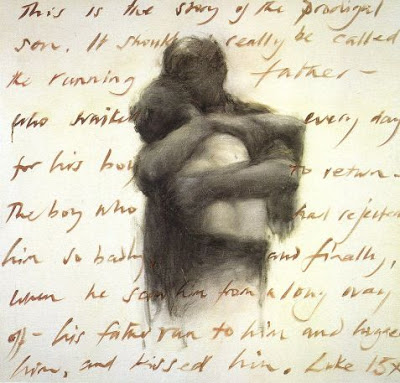
Traditionally in this story, we focus on the younger brother. He wanted half of his estate. His father gave it to him.. He spent his money on prositutes and various other things you do with a lot of money. You can say that the younger brother was on self-discovery trip. He wanted to get away from his father and spread his wings and find himself. After he spent everything he had he found himself eating pig slop and working as a hired hand. As the story goes, the younger brother comes back and his father runs to him and embraces him.
A couple of things you need to know about the Jewish culture. A father never ran to anyone. Everyone came to the father. The second thing to note here his that the younger son would normally have to work his way back and earn his father’s love. These notes are crucial to understanding the story because the hearers of this story would have been dumbfounded that the father ran to the child. When the father embraced him and through him a party (which meant everyone was invited), this was unheard of. He immediately became a regular part of the family without having to earn his way back into the family. This too would have dumbfounded them. Jesus had their complete attention.
This would have been a great ending to a great parable. But Jesus thens turns the parable and talks about the older brother. If you know the story, you know that the older brother was not happy. His father (instead of enjoying the party) is out talking with the older son trying to convince him to come and join in the celebration. The older brother refuses. We learn here that not only was the younger brother lost but the older brother was lost too. The older brother was guilty of self-righteousness. He was focused on himself and refused the father’s invitation to come in and join the celebration. He was so bitter that his heart grew hard towards the father. The bottom line is that he refused to repent of his self righteousness. You see, the older brother was right when he said, “I have obeyed you. I have done everything you have asked of me but yet you wouldn’t even give me a goat to have a party with my friends.” The older brother was caught up in the good things he was doing and thought he deserved what the younger brother was willing to receive. The older brother needed to repent of every good thing he had done and turn to the father. The older brother (like the pharisees) refused and grew bitter towards the father.
Another thing to understand about the Jewish listeners to this story is they expected the older brother to go out and find his brother to keep the family together. If the younger brother was lost it was up to the older brother to go find him. Why didn’t the older brother go out and look for him?
In the the two previous parables that Jesus told in Luke 15 before this parable, he told the parable of the lost coin and the lost sheep. In both parables they went looking for the object and found it. In this parable, the prodigal son was lost but the older brother never went to go find him. Tim Keller suggest that the reason that Jesus told it like this is so that they would long for the true older brother. The true older brother is Jesus.
Jesus does go looking for the lost. He is asking those who are on a trip of self discovery to repent and come home. He is asking the self-righteous to repent and come home.
A final part of the story that you might not be familiar with is the fact that when the younger son came home the father split the remaining estate with his oldest and youngest son. Ouch! The youngest son got the finest of robes and a ring for his finger. This is something the true older brother (Jesus) deserved.
Instead what did the true older brother receive? Instead of a ring on his finger – he got a crown of thorns. Instead of getting the finest robes – he was stripped naked.
The true older brother paid a heavy price. Why? Because he loves you and he wants to keep the family together.
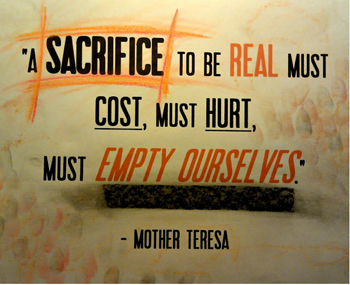
Are we willing to sacrifice for the sake of the Good News?
Here is today’s text (Acts 4:32-37)
32 All the believers were united in heart and mind. And they felt that what they owned was not their own, so they shared everything they had. 33 The apostles testified powerfully to the resurrection of the Lord Jesus, and God’s great blessing was upon them all. 34 There were no needy people among them, because those who owned land or houses would sell them 35 and bring the money to the apostles to give to those in need.
36 For instance, there was Joseph, the one the apostles nicknamed Barnabas (which means “Son of Encouragement”). He was from the tribe of Levi and came from the island of Cyprus. 37 He sold a field he owned and brought the money to the apostles.
When it comes to giving – what can we learn from the church in ACTS?
They were united in heart and mind. They were focused on one thing – to use their resources to advance the message of Jesus Christ.
The sharing of their resources allowed the apostles to “testify powerfully to the resurrection of the Lord Jesus, and God’s great blessing was upon them all.” They all agreed that this was the most important thing they could be doing right now. They were selling their houses, their lands, their fields to not only care for each other but to make sure that the message of Jesus’ death and resurrection was getting out.
What caused them to make such a huge sacrifice?
They understood completely the sacrifice Jesus made for them
- Jesus didn’t have any tangible resources to give them – in fact Jesus was dependant on many people to support his ministry. Many sacrificed so that Jesus could eat and sleep. He sacrificed his home, his family, and His life to convince the world that God loves them.
They understood completely that God sacrificed his only Son.
- They understood that God willingly gave up his son – and for a moment – God turned his back on his son – and then He watched him die for the sins of the world.
Jesus taught time and time again that sacrifice was a part of the walk of faith.
- He taught it.
- He modeled it.
- He lived it out.
They understood that sacrifice was a priveldge and not a duty.
Look at Mark 12: 41-42 (click on verse to read it) – He used the example of the widow giving her last two mites to the temple treasury for what it means to really sacrifice.
Look at Matthew 26:6-7 (click on it to read it) – He used the example of the woman who poured out an alabaster jar of expensive perfume over his head. His disciples were appalled that she could such a thing. She recognized who he was and could nothing else.
In Acts 4 (our passage today) – people willingly gave up their resources. They understood (by Jesus example) that sacrifice was part of the walk of faith. They understood that in order for the message to continue to get out that everyone had to sacrifice.
In 2 Corinthians 8:3-4 – Paul continues to encourage the followers of Christ to give sacrificially.
Each of these examples speaks not only to the willingness to give but also to make a sacrifice.
To sacrifice something means that one is willing to give something up for the benefit of another. In sacrifice there is no personal gain.
When you examine all of these stories you learn that sacrifice is not a natural thing to do. All you have to do is watch a bunch of toddlers playing together and they all want the same toy. They will do anything to get it. They will throw a fit, cry, jump up and down, and scream at the top of their lungs.
Willingly sacrificing is a supernatural act of God. God is the one who puts the willingness in our heart to sacrifice. In each of the stories that we glanced at today, people willingly sacrificed because they had been broken.
- Being broken turned their selfishness into selflessness.
- Being broken turned their greed into generosity.
- Being broken turned their self-centeredness into other-centeredness.
Something happened in their life that caused them to think beyond themselves. Something happened in their life that caused them to do something beyond themselves.
That something was an encounter with Jesus.
- Paul had his experience on the road to Damascus.
- The prostitute who poured the oil on his head was a forgiven prostitute.
- The “church” in the book Acts watch Jesus die. They understood the sacrifice He made.
Because of their brokeness- they willingly gave of themselves to God by sacrificing time, resources and in some cases, lives.
If you look at 21st century Christianity you would discover that we have created a comfortable Christianity. Worse yet, a spoiled Christianity.
- My brother and sister claim that I was the spoiled one in my family. I always got what I wanted. I always had more freedom that everybody else when they were my age. I always got my way. I “guess” you could say I was the spoiled one.
21st Century Christianity is the same way. We get what we want. When we want it. We have the freedom to do whatever we want. We always get our way. As long as we have Christianity the way we want it then we are okay.
- We enjoy our religious comforts. I am not talking about pews, air conditioning, and all the creature comforts we have to help our worship experience more comfortable. I am talking about our own comfortable Christianity. We create our own Christianity that makes us feel comfortable. We do just enough (we think) to please God, please others, and to make ourselves look good.
- As long as I am comfortable in my faith.
- As long as I don’t have to sacrifice a way of life.
- As long as I can do Christianity the way I believe it needs to be done.
- As long as I can change my belief to fit my behavior instead of changing my behavior to reflect what I say I really believe.
- As long as God doesn’t ask me to give up too much.
Let’s be honest – we’re spoiled. 21st century Christianity in America has made is so easy to follow Christ.
- In today’s Christianity there is no sacrifice needed
- There is no change necessary.
- As long as I get what I want – I will follow Christ.
Christianity has made sacrifice inconvenient.
Going the extra mile has become inconsistent (we do it when we feel like it).
Loving our enemy is no longer necessary.
Generosity toward each other and to our community is the exception instead of the rule.
It is because the 21st century approach to following Christ that our hearts are no longer broken. In other words, we would rather our hearts be warmed by God instead of broken by God.
I know we can’t go back to the way things were in the 1st century church.
- We can pray for a willing heart.
- We can remember God’s generosity towards us.
- We can confess there is much more to following Christ than what we have made it.
Are we willing to sacrifice to adance the message of Jesus Christ?

Nothing has more power over us than Money. Sex comes in a close second but money still is the number one influence in our life. If we got it, we got to either spend it or store it. We never have enough of it and when you have enough of it you still want more. It has an uncanny power over us. Whether you have a lot or little, it affects our attitude. It affects our attitude toward the rich and the poor.
We choose a job over how much money we are going to make. Over half the working populations hates where they are working and wishes they had another job. This means that if you asked one out of every two people why they work where they work, they will tell you it is for the money.
We love money – that it dangerous. We love money so much that we are totally dependant on it. It is like the blood in our bodies. We can’t live with out it.
Luke 12 tells us to watch out what money can do to us. Specifically it tells us to watch for greed – watch out for all kinds of greed. Jesus warns us in Luke 12 that we might be more greedy than we think.
None of us in here would admit they were greedy. Over the course my ministry I have counseled a number of people about on a lot of different issues. Not once over my 22 years of ministry has any one come into my office and confess they were greedy. Not once has anyone said, “pastor, I think I own too big of house”, or “pastor, I think I own too much stuff what do I do”, or “pastor I own too nice a car”. No one has ever asked me how to get out to the trap of materialism. No one wants to confess that they might be greedy. In reality, probably no one recognizes they are greedy.
Greediness is one of those sins that is not easy to recognize. With adultery you don’t all of sudden wake up one morning and realize and say, “you’re not my wife.”
The reality is we all know someone who has more money than we do. They spend it on far more expensive things than we do. We call them materialistic. Most of us in here would not consider ourselves to be materialistic – why? because we know somebody that has more money and stuff than we do.
If today, you are saying that materialism is not a big problem of mine- that is a bad sign. This is one of those sins that has the sign, a symptom that says, “I am sure this is not true of me.” This is why Jesus says watch out because this can harden your heart toward God. Because if you say, “I am sure this is not true of me”, It is a sign you have a greed problem.
Greed and materialism blind us and don’t allow us (meaning followers of Christ) to ask the questions that need to be asked:
- Do I really need to spend this much money on this?
- Do I need to be putting this much money into my apartment or my house?
- Do I need to be putting this much money on clothes, shoes, and tv’s?
- Do i need to be spending this much money on this or this or this ……?
Because we don’t think we are greedy or materialistic we don’t ask these kinds of questions.
We don’t think about ways we can give more money to the church, the poor, to my friends, or to my neighbors. We don’t want to ask, “Isn’t there ways I can be much more radically generous if I made this and that change in my life?” We don’t want to think of ways to be generous towards others and towards our church – why? Because we begin to feel guilty (by the way guilt is a sign that something needs to change in your life). and we know that if we are to be generous we will have to make some kind of lifestyle change in order to become generous.
To become generous, we can no longer take a blind eye to the sin of greed.
All throughout the gospels Jesus taught about giving everything away. It is true from last week that Jesus commended the religious leaders for tithing their resources to the church. But it doesn’t stop at tithing – that is just the beginning.
In the book of Acts, where the church began, they used to put all their resources together and care for one another. The rich and poor worked together. No one was better than the other. There was no greed. They supported each other and gave generously to one another. If you remember, the church grew by leaps and bounds. Why? Because everyone was looking out for the interest of their brother and sister instead of themselves.
After Jesus came, the score card changes. 10% is just the starting point now. He teaches us to share everything and be generous with all your resources.
Imagine with me (if you will), if the whole church was generous with its resources as Jesus asked us to be. The government wouldn’t need to tax the wealthy because the wealthy would be willing to share their resources. The government wouldn’t need to take $20 out of every check to fund those who are less fortunate. A friend of my mine on facebook said, “We could view the increase in taxes joyfully as giving to and loving people in need. The government wouldn’t have started to do it if the church had.” OUCH!
That was a convicting statement. I have wrestled a long time with the lack of generosity of the church and of the Christians towards the community in which it resides. Because of the lack of generosity of the Christian community, the government has stepped up and is doing what the church should be doing. I don’t think we can miss this opportunity to be the church in our community. A church that can have a meaningful impact in the lives of our neighbors.
It is the greed of Christians and non-christians a like who have created the mess we are in. Let’s stop blaming the government for what is going on and take responsibility for our sin of greediness.
As Christians, we need to step up and confront our own greed and ask the hard questions – how much do I really need? What can I live without so that I can become more generous to my friends, the poor, the church, and my neighbors?
Look at the people of Israel sacrificed in Exodus 35 and 36 (click on the chapter numbers to read the story).
They brought expensive stones, expensive wood, bronze and silver (which were more valuable than gold), their gold jewelry – they were bringing everything including the kitchen sink. They were bringing it all. They brought so much they had to tell them stop.
How do you get to the place of generosity?
- We must be wiling to ask the hard questions:
What am I doing with my money?
Is there a way I can simplify my life so that I can become generous to others?
Is there something I need to give up so that I can give out?
Do I need to be spending this amount of money on this or this or this and this?
Might the money be used to bless someone else? Bless the church? Bless the poor?
- Strive for spiritual wealth by freeing yourself from money
Money controls us.
Here is a test to see if your money controls you:
When you look at a rich person do you have the feeling of spiritual superiority. Do you look at them and say, “boy I am sure glad I’m not materialistic like them?”
When you look at a poor person do you have the feeling of spiritual superiority. Do you look down at them and have the feeling of being better than them.
How do you get free?
First of all recognize what you treasure the most. What we treasure the most is what we are willing to spend our life and resources on.
Matthew 6:21 For where your treasure is, there will your heart be also.
If you look at the life of Jesus – you find out what he treasures the most. He was willing to do die for you and me. He gave his life for the most precious thing to him.
He could do that because he was free from greed. He died for the rich Pharisee and the poor publican. He gave himself.
If you notice he never gave us any kind of treasures here on earth because he had no earthly treasures to give. He simply gave the most valuable thing he could give and that was his life.
By dying for us he gave us treasures in heaven.
He reminds that the stuff on this earth, rust, decays, wears out, and money runs out- don’t put your “treasure” in things on this earth. He encourages us to be generous with our resources.
Once you are free from your stuff – generosity soon follows.
Secondly, be generous with your stuff.
2 Cor. 9 Remember this: Whoever sows sparingly will also reap sparingly, and whoever sows generously will also reap generously. 7 Each of you should give what you have decided in your heart to give, not reluctantly or under compulsion, for God loves a cheerful giver. 8 And God is able to bless you abundantly, so that in all things at all times, having all that you need, you will abound in every good work.
If you sow generously you will reap generously. In other words if you invest your resources and yourself generously in those around you God is able to bless you abundantly.
So, are you greedy or generous?

Opening
10 Common Misconceptions About Money ( by Stacey Johnson from Money Talk News)
1. The more money I have, the happier I’ll be.
Let’s ask Howard Hughes, Anna Nicole Smith, John Belushi, Chris Farley, Marilyn Monroe, Michael Jackson, Amy Winehouse, Jimi Hendrix, Janis Joplin, Kurt Cobain, and Elvis about this one. OK, guys, show of hands… did fame and fortune make them happy?
When you’re on your death-bed, will you be thinking about money? If so, your contribution to the gene pool was negligible. Rather than obsessing about money, think about what really makes you happy. Then make only enough money to take part in those activities. Making more is a waste of the only non-renewable resource you have: your time on the planet.
2. A big income will keep me out of debt.
What’s the difference between someone who makes $50,000 a year with a $100,000 mortgage and someone who makes $500,000 a year with a $1 million mortgage? Answer: nothing. Unless they have money set aside for emergencies, they’re both a paycheck away from disaster.
Debt often rises with income. What keeps you out of debt isn’t a high income or net worth. It’s not borrowing money.
3. Millionaires drive fancy cars, wear fancy clothes, and live in fancy houses.
Not according to the folks who did a bunch of research and wrote The Millionaire Next Door. According to their studies, the average American millionaire drives an unexciting American car, lives in the same nondescript house they’ve owned for years, and avoids designer labels. That’s how they became millionaires.
4. The more money I have, the less worries I’ll have.
Balderdash. Money doesn’t end anxiety. It gives you something else to be anxious about: losing your money. Granted, those without enough money to eat or keep a roof over their heads have lots to worry about. But once you have enough money for all your needs and a reasonable number of your desires, the excess will add to your concerns, not alleviate them.
5. Money will help me find love.
In my experience with women, they’re not attracted to money. They are, however, attracted to ambition and intelligence, especially when it presents as humor. Everyone’s attracted to people who are self-confident, non-needy, and able to laugh at themselves.
Like a peacock, wealthy people can easily attract attention. But attention isn’t the same as admiration or affection. And even if it works, do you really want to spend your life with someone so shallow and insecure they were attracted to your money?
6. I’ll have more fun if I have more money.
When I was young, I didn’t have two nickels to rub together, but I had a ton of fun. Today I have lots of nickels – and am happy to report, still having a riot.
There’s no doubt that money can furnish the elements of a good time. But if you need money to have fun, you’re boring. And should you become a billionaire, you’ll still be boring.
7. Money means security.
When you boil it down, a primary purpose of money is to make life more predictable. It allows you to control your environment by being prepared for the unexpected.
While that’s partly true, there’s not enough money in the world to completely control everything.
8. Money will enable me to meet interesting people.
Overcoming adversity is what makes people interesting, not how much money they have. People without at least a few skeletons in the closet are often shallow as a puddle.
9. I need money to travel, and travel is important.
The world is an interesting place, and being well-traveled makes you interesting. But travel comes in many forms, including the budget variety. If you want to see faraway places, you’ll find a way.
10. Money will buy friends.
This is not only untrue, it’s the opposite of what money actually does. People with vast wealth or fame can’t trust the motives of those surrounding them (see No. 5 above). That’s why the people they count as true friends are normally either people they knew before they were rich and famous, or people who are equally rich and famous.
What is disturbing about these top ten misconceptions is there are many followers of Christ who believe these are true! There are people out there (Christians included) who really believe that money can buy happiness, money can buy peace, money can satisfy the longings of our heart.
The only thing that money can buy is things.
Jesus talked a lot about money. Jesus knows that our heart is attached to our money.
God is interested in your money. Not because He needs your money…for He certainly does not!…but because YOU need it! Since you are imp’t to God, your money is imp’t to God.
God is interested in how you secure it/spend it/save it/share it. Immediately, some people say…don’t talk about money, preacher, talk about something spiritual.
Nothing is more spiritual than how you handle your money. It is the supreme test of where our heart is.
Matthew 6:21
For where your treasure is, there will your heart be also.
Money is something we use everyday, it’s our medium of exchange, our very survival depends on it. How can Jesus Christ be Lord, and not be Lord over our money? How can he care about us, and not care about that which is so intrinsically tied to our very survival?
“Don’t talk about money, preacher, talk about something spiritual…wait just a minute! The Bible says that the love of money is the root of all evil! If all the evil in this world is directly or indirectly traced back to a love of money, then that means there is nothing more spiritual that we can talk about today, than our attitude toward money.
Eccles. 10:19 New Living Translation (NLT)
19 A party gives laughter,
wine gives happiness,
and money gives everything!
Money is everything to us – God knows our heart.
“But, it’s uncomfortable…I don’t like it when the preacher talks about money.” If that’s true, you would not have liked the preaching of Jesus Christ. When He walked this earth, he gave 36 parables, and 16 of them had to do with our attitude toward money! 1 out of every 10 verses in the NT deals with our attitude toward money!
Verses about faith…about 500
Verses about prayer—500
Verses about money—over 2,000
Remember the story Jesus told about the widow’s mites? The Pharisees were giving their large offerings, and the little lady gave her 2 mites. That whole story has to do with our attitude toward money.
Look at Lk. 16…at the end of the story Jesus said, if you have not been faithful w/ your money, who do you expect to commit to you the true riches? That whole story has to do w/ our attitude toward money.
Rich Young Ruler—came to Jesus and asked what he had to do to be His follower…Jesus said, sell all you have, come and follow me. But he couldn’t do it, he went away sorrowful, because he didn’t own his possessions…they owned him!
There are 3 groups in this room right now and each group has one of these attitudes when it comes towards their money and possessions.
1. It’s all mine. I worked for it. I earned it. I deserve it. I can do what I want to with it …and when offering plate goes by, they say, I can give if I want to, but I don’t have to. If I feel led to give a dollar, If I feel like $20, I will give it. …but it’s all mine, I can do what I want with it.
This attitude is I am the owner and I will do what I want or give how I feel.
You are right – you can do what you want with it. You can give whatever percentage you like. You don’t have to give anything at all! There is nowhere in scripture that says you HAVE to give anything. But the scriptures do challenge us to give everything. He wants are time, talent and all.
Look at the story of the woman and her two mites. She didn’t have to give her last two mites away. She could have saved them for a rainy day but Jesus used this woman to teach his disciples about having a willing heart.
2. Tithe belongs to God, and the rest is mine (90%). In obedience I give Him 10%, and with the rest, I’ll do what I want to with the rest.
This attitude says that, “ I am the owner and I share with God.” Do you hear the error in that line of thinking! We are basically saying I have what I have because I earned it. And because I am a nice person, a good person I will share some with God.
When you at the story of the Rich Young ruler, Jesus asked him to sell everything he had and give it to the poor. The rich young ruler chose not to and he walked away sad. What we learn is that his stuff controlled him instead of God controlling him. He simply thought if I give a little of myself to God – God would be pleased. God doesn’t want us to share our resources he wants to own our resources.
3. It all belongs to God…the tithe/the rest of it. I return to Him what He has commanded, and He entrusts me with the rest of His money. Just because I return the tithe, that doesn’t give me the right to do whatever I want with the rest of it. I still have to pray about every expenditure and my lifestyle…and be a good steward of ALL of His money. I will be judged someday for what I do with this…and with this…. and …..
This attitude says that, “It all belongs to God and I am called to be good steward.”
Luke 16: 10 “If you are faithful in little things, you will be faithful in large ones. But if you are dishonest in little things, you won’t be honest with greater responsibilities. 11 And if you are untrustworthy about worldly wealth, who will trust you with the true riches of heaven? 12 And if you are not faithful with other people’s things, why should you be trusted with things of your own?
If we are faithful in the little things we will be faithful in larger. – and one of those little things is tithing.
Tithing is simply this – giving 10% of your income.
This idea of tithing and giving an offering was not instituted by man. If you look at the scriptures closely you will discover that God called all the tribes of Israel to give a portion (sometimes up to 22% of their resources) to the tribe of Levi. The tribe of Levi served the church as priest and servants who took care of the church.
Since the beginning of time, tithing has been God’s method to provide for the church. God’s people thru out all history have maintained the practice of returning to God the first 10%.
“That’s the old testament law!” we no longer live under OT law.
No, God put that in the heart of His people long before the law was ever given.
Gen 14 – Abraham willingly gave 10% of his of all the goods he had recovered from his victory to Melchizidek.
Abraham wasn’t forced to give anything to Melchezidek. He willingly gave to him.
So Abraham started it ….
A few hundred years later, Malachi confirmed it, by saying in 3rd chapter of his Book
10 Bring all the tithes into the storehouse so there will be enough food in my Temple. If you do,” says the Lord of Heaven’s Armies, “I will open the windows of heaven for you. I will pour out a blessing so great you won’t have enough room to take it in! Try it! Put me to the test!
Then a few years later – Jesus commended it. (Matthew 23)
23 “What sorrow awaits you teachers of religious law and you Pharisees. Hypocrites! For you are careful to tithe even the tiniest income from your herb gardens, but you ignore the more important aspects of the law—justice, mercy, and faith. You should tithe, yes, but do not neglect the more important things. 24 Blind guides! You strain your water so you won’t accidentally swallow a gnat, but you swallow a camel!
If Jesus, himself, commended it; who are we to cancel it?
Who are we to say I will give what I want, when I want, how I want?
A lot of followers are convinced that they can’t afford to tithe.
Gas prices are up. They are taking more payroll tax out of my check. Things are more expensive.
And some people have the attitude that “ it’s my money and I will do what I want with it.”
God is ushering us a challenge in Malachi 3:10 – 10 Bring all the tithes into the storehouse so there will be enough food in my Temple. If you do,” says the Lord of Heaven’s Armies, “I will open the windows of heaven for you. I will pour out a blessing so great you won’t have enough room to take it in! Try it! Put me to the test!
God is telling us to TEST HIM! See if it is true.
A very good friend of mine who keeps track of every penny he spends. He was anal when it came to budgeting. When he shared, he said there was no way he could give 10%. Every dollar was accounted for. Every penny has it’s place.
But he was challenged ….. he took a step of faith and said he would try it for a year. He literally, financially, and spiritually put God to the test.
He shared a year later that God did a work in his heart that year. Til this day he still can’t explain why he comes out ahead every year. In his mathematical, budget-minded mind in make no sense.
The bottom line is that he took on the challenge. He put God to the test!
God passed!
Are you willing to take on the challenge and put him to the test?
The 3:10 challenge
Give 10% of your money for 3 months – it will change your attitude toward your money and possessions.
 mondayschoolblog