
Matthew 1:18-21
This is how the birth of Jesus the Messiah came about: His mother Mary was pledged to be married to Joseph, but before they came together, she was found to be pregnant through the Holy Spirit. Because Joseph her husband was faithful to the law, and yet did not want to expose her to public disgrace, he had in mind to divorce her quietly.
But after he had considered this, an angel of the Lord appeared to him in a dream and said, “Joseph son of David, do not be afraid to take Mary home as your wife, because what is conceived in her is from the Holy Spirit. She will give birth to a son, and you are to give him the name Jesus because he will save his people from their sins.”
Corrie Ten Boom and her sister Betsie had been imprisoned by the Nazis for hiding Jews behind the wall of their Holland home, and Nazi prison conditions were pretty well unbearable.In the midst of their suffering, the women prisoners around Corrie and Betsie held little Bible studies, They gathered around the Bible “like waifs” clustered around the blazing fire. There’s one catch in this story. Bibles weren’t allowed in the prison camps. How they got away with this is because the guards refused to walk in their barrack. It was flea infested.
Sometimes, the circumstances we are put in just don’t make sense.
God used fleas to keep the barrack supervisors out so that they could hold a Bible study without interruption or persecution. God used these two women to give hope to others in a hopeless circumstance. God uses whoever is willing to lose everything and allow God to do anything through them and their circumstances.
 Joseph was one of those guys.
• He was a just man
• He was a righteous man
• He was a commoner
• He was a devout follower of the customs of his religion with his observance of Passover.
• He was a man of integrity and willingness to be obedient to God’s direction and guidance.
Joseph was willing to put his reputation on the line. He was willing to be obedient when being obedient didn’t make any sense. Joseph did not just “have to go along with this plan” because of the special requirements of Mary. Joseph, of his own free will, wanted to know what God’s will was, and to do it. He obeyed God despite the circumstance that told him that he should divorce Mary quietly. This was within his right to do. Despite the circumstances Joseph  chose to do the right thing. He chose to serve Mary. Joseph didn’t get to choose these circumstances.
Most of the time our circumstances tend to choose us.
- None of us got to choose our parents
- None of us got to choose our brothers and sisters.
- None of us got to choose what city, state, and country you are born
Corrie and Betsy didn’t choose to be thrown in a Nazi concentration camp. They didn’t choose to be Jewish. Joseph and Mary didn’t choose the circumstances that they were part of. No one gets to choose their circumstances. But all of us are chosen to do something with the circumstance. Instead of complaining about your circumstances have you ever thought you were chosen to go through circumstances you are going through? Have you ever thought it was a badge of honor rather than a recipe for defeat?
Joseph was presented with a tough circumstance. Like Mary, he probably would had not had written his script this way. God chose Joseph for such as time as this. Joseph didn’t choose the circumstance. But he was chosen to do something with the circumstance. He was perfectly within his rights to quietly divorce Mary. He also had the right to have Mary stoned for not keeping her part of the agreement. In this circumstance Joseph chose to do something with the  circumstance. He chose to serve Mary.
Sometimes the circumstances that we are put into just doesn’t make sense. We would have never chosen the circumstances we have faced in life. Some have faced cancer. Some have faced divorce. Some have had ones they loved die way to soon. Most of us wouldn’t have written the script for our lives the way God has written it.
Paul wouldn’t have chosen imprisonment, being shipwrecked, and left for dead. The disciples wouldn’t have chosen to be ridiculed, mocked, and martyred. We are not in charge of the script. Hebrews 12:2 reminds that He is the initiator and perfector our faith.
We spend a lot of time wondering why we are in the circumstances we are in. Why are we poor? Why does are car keep breaking down? Why didn’t I get that job? Why didn’t this happen? Why didn’t that happen? We need to stop questioning the circumstances we are in (too much questioning leads to being paralyzed and not doing anything) and start doing something.
I learned something about my family recently that I had never known before. I learned how poor my family was when we were growing up. I never knew the reason why we had gravy and bread sometimes. It was because my mom and dad couldn’t afford to buy groceries that week. As a kid I didn’t understand that we were that poor. I am pretty sure my mom and dad understood the circumstances we were in and they did something. I am so thankful they didn’t get paralyzed by the lack of income – they just worked harder. They did something.
The circumstances Joseph was faced with just didn’t make sense. He kept Mary as his wife. He took his 9 month pregnant wife on a 70 mile donkey ride. His son was born in a barn. In the midst of these circumstances what did Joseph choose to do? He chose to serve her. Sometimes the circumstances we are faced with just don’t make sense.
When the circumstance we are in (whether you created the circumstance or not) doesn’t make sense what do we do? We do the same thing as Joseph and the Ten Booms
- Listen for God’s direction.


Tough circumstances make us more aware of God. Tough circumstances teach us to listen a little closer. Tough circumstances help us understand that we are not in control. They help us understand that we do need outside help. If you ask God for direction in the midst of a tough circumstance, he will give it to you. When I was walking through a tough circumstance with one of the churches I have pastored at, I had to make a difficult decision. There were some in the church who thought I was mistreated and unfairly criticized. I had an older gentleman in the church who was a very powerful man in our community and had a strong voice in the church. He knew a lot of people in our community and could persuade people to leave the church so that I could start a new one somewhere else. He was wanting me to be his senior pastor. In that moment a lot of things ran through my mind. It was very flattering and ego building. i remember asking God for direction. I told him what he was saying was not of God. It was wrong.
- Choose to do the right thing even if it doesn’t make sense.
This is the toughest thing you will do when your circumstances are bad. Even when it didn’t make sense to Joseph, he still chose to do the right thing. The right thing was following through on his commitment to stay with Mary even though he could have rightfully divorced her or had her stoned for being unfaithful.The Ten Booms held a bible study to give hope where everything was hopeless. They didn’t have to do it. In fact it didn’t make sense to do it. None of these women were ever going to see their kids again. None of these women were ever going to see their homes again. Why give hope to women when there really was no hope of them getting out alive? But they did right thing.
- Serve those around even if it doesn’t make sense.
Our natural desire is to serve ourselves and make our life as easy as it could be. We create this spiritual entitlement mentality that we are here to be served when Jesus flips it and says in Luke 22:27; Who is more important, the one who sits at the table or the one who serves? The one who sits at the table, of course. But not here! For I am among you as one who serves.
Jesus is telling us the most important person in the kingdom of God is the one who serves.
Psychologist tells us that 80% of the people they see their problems could be solved if they would go and server somebody. I am convinced that this is why many Christ followers get stagnant in their faith. They don’t serve anybody other than themselves. They change churches thinking that a new church or a new pastor or a new program is going to help spark their faith. The key to not getting stagnant in one’s faith no matter where you go to church is investing yourself into someone else’s life. That’s why when you read the book of Acts you see a compelling faith. They weren’t stagant because they were business serving others.
When you are in or going through difficult circumstances, choose to serve somebody. When you are not going through difficult circumstances, choose to serve somebody. If you consider yourself a shy person choose to serve somebody. If you are rich or poor, choose to serve somebody. No matter what your circumstances in life are, no matter if they make sense or not, if you are a Christ follower, choose to serve somebody.
This is what Joseph did.
This is what the Ten Booms did.
This is what Jesus did.
In each case God used the circumstance they were in even though it didn’t make much sense. They chose to serve despite their circumstances.
What about you? Do your circumstances dictate your life or do you allow your faith to dictate your life? I can guarantee you that whatever circumstance you are in, even though it might not make sense while you are in the middle of it. God will use that circumstance if we are willing to trust him, if we are willing to stay obedient, if we are willing to surrender our sense of spiritual entitlement, it will change your life. It won’t necessarily make it better it will draw you closer.
The next time a flea jumps on you at your home or someone else’s home think of the Tenbooms and what they did with the dark circumstances they were in.
Have questions about the church go to www.mariongfchog.org.
 (click on pic to listen) World War II was at its height. Forces were engaged in what was known as, “The Battle of the Bulge” — or “The Christmas War of 1944.” The fighting was fierce in the bitter cold and snow.
The Allied Forces bombed and established control of a strategic area. The commanding officer turned to several of his men and said, “Sweep across that field, and kill all German soldiers still entrenched in the snow. I want no prisoners. Absolutely none!”
One of the American soldiers selected gives his account of what happened next. “As I walked, I immediately shot and killed two wounded and suffering soldiers.” He continues, “Then, suddenly I approached a tall, young guy with a broad germanic forehead.
“He was leaning against a tree. He wasn’t wounded — simply exhausted. He had no food, no water, no comrades in sight, no ammunition. Fear, fatigue, defeat, and loneliness overwhelmed him. He spoke English with a beautiful vonderful- vorld-type accent.
“When I noticed a little black Bible in his shirt pocket,” he reminisces, “we started to talk about Jesus and salvation. Wouldn’t you know it, that lanky German soldier turned out to be a born-again Christian who deeply loved the Lord. I gave him water from my canteen; I even gave him crackers. Then, we prayed and read God’s Word together. And we wept together too.”
His voice began to tremble, as tears splashed down his cheeks. His face began to reflect anguish.
“It seems like only yesterday. We stood a foot or so apart, as he read a Psalm from his German Bible. Then, I read Romans 12 from my King James translation. He showed me a black – and-white picture of his wife and daughter.”
The soldier took a deep breath. “You see, in those days, I was a young man in my early twenties. I had just graduated from a Christian college in Illinois and hadn’t had time to sort out my thoughts on the war.
“Maybe that’s why I did what I did. “I bid my German brother farewell, took several steps away, then returned to the soldier. Romans 13, the ‘thou shalt not kill’ commandment, the promises of eternal life, the Prince of Peace, the Sunday school distinction between killing and murder, the irrationality of war — all swirled in my mind.
“When the German soldier saw me returning, he bowed his head and closed his eyes in that classic prayer posture. Then it happened. I said three crisp sentences that I still repeat once or twice a week when I have nightmares about the war, ‘You’re a Christian. I am too. See you later.’
“In less than a second, I transformed that defenseless Christian soldier into a corpse.”
Sometimes being obedient just doesn’t make any sense.
Thousands of years before Jesus was born people were obedient when it didn’t make sense. You have Abraham leading his family to an unknown land simply because God told him to go. You have Moses leading 2 plus million people out of Egypt simply because God told him to go. You have Gideon leading an army of 300 against an army of thousands because God told him to go. You have Isaiah, Jeremiah, Hosea, Amos, and countless other prophets going to the people of Israel and telling them to return to God (and hardly anybody listened) because God told them to go.These are all people who were obedient when it didn’t make sense to be obedient.
Then for 400 years, God was silent. God didn’t speak to anyone. Until he spoke to Mary. What did he say to Mary? God said to Mary through an angel, “Greetings, you who are highly favored! The Lord is with you.”
Way before Jesus was born the prophet Isaiah said this …. (Is 7:14)
14 Therefore the Lord himself will give you a sign: The virgin will conceive and give birth to a son, and will call him Immanuel. This was written 600-700 years before Jesus was born.
Mary was very young and yet she was a woman of her people, the nation of Israel through whom God had chosen to reveal himself. There is a reason why God chose Mary out of all the other woman:
• She was humble
• She was poor
• She was obedient
And she was highly favored.
This doesn’t mean she was better than everyone else but that she was a sincere, godly young woman. She lived a righteous life and obeyed her authority. She honored God with her life. God didn’t choose her based on their heritage, family name, or social status. God chose her based on their spiritual maturity. Mary, though she was young, was able to be used by God because she had followed Him, lived by His commands, and kept herself pure.
 In other words, she was obedient when it didn’t make sense to be obedient. She was all in. Adversity didn’t affect her. Discouragement didn’t control her. She had no intentions of turning back.
She now had a baby inside of her given to her by God. They call it the immaculate conception. Once conception took place She couldn’t turn back. I am sure this wasn’t the way she planned it. She was betrothed (which is like being married) to Joseph but they hadn’t gone through the traditional ceremony and they weren’t living together. I am confident that her plan was to go through the ceremony and then conceive. Once conception took place, well, she had to be all in. I am sure this didn’t make a sense at the time.
Why would God allow her to go through the all of this – Matthew 1:22 All this took place to fulfill what the Lord had said through the prophet: 23 “The virgin will conceive and give birth to a son, and they will call him Immanuel” (which means “God with us”). Joseph couldn’t be the father. As good and righteous as Joseph was, He too, was obedient when it didn’t make sense to be obedient but he wasn’t perfect. Jesus had no DNA of Joseph. Joseph was his imperfect step father. God was his perfect heavenly mother. I remember when Dana told me we were pregnant with Lyndsay and I was going to be a dad. I knew we were going to have kids some day I just didn’t know when. As exciting as it was for me, I don’t know any guy who understands what it means to be a dad until they become one. You can read all the books to prepare yourself. But until you become one ….. do you begin to understand the incredible responsibility. As much as a perfect dad as I wanted to be – there was no way to accomplish it. I would mess up hundreds of times.
You would think being pregnant would be with the Son of God would give you some status. Only Mary and Joseph knew it was the Son of God. They are the only ones who knew for a while. Despite being the mother of the Son of God, Mary still had to deal with the shame people heaped on her. Mary had to deal with being looked at as a prostitute. Mary had to worry whether she was going to live or not. Mary had to deal with the snickers behind her back. Mary had to deal with the town gossip. Through all of this, she was obedient when being obedient didn’t make sense. The scriptures tell us she rejoiced! Despite all the stuff that was going wrong around her – she rejoiced.
Luke 1:46-48
46 And Mary said:
“My soul glorifies the Lord
47 and my spirit rejoices in God my Savior,
48 for he has been mindful
of the humble state of his servant.
From now on all generations will call me blessed,
While walking through all these things, she still loved God. She was willing to be obedient despite what it was going to cost her. With all the things that were going on around her, she remained obedient when it didn’t make sense to remain obedient. When the circumstances in her life didn’t make sense and the fact it didn’t go in the order that she had planned, she remained obedient when didn’t make sense to be obedient.
How was Mary was able to remain obedient when it didn’t make sense to be obedient?
A: She was all in!
Like Elijah, once he had an encounter with God, he went and burned all of his farm equipment. He knew he wasn’t turning back. Like Abraham, once he had an encounter with God, he left everything he knew. He knew he wasn’t coming back. Like Paul, once he had an encounter God, he left everything he knew – his job and, his previous life. He knew he wasn’t going back to his old way of life. Each of them we’re all in.
Each of them were all in!
When you are all in – you are able to rejoice in situations that just don’t make sense.
When you are all in – God turns those drumbeats of doom in your head into a song in your heart.
When you are all in – You will not be dependent on the company of others to ease your loneliness. For he is Emmanuel – God with us.
When you are all in – The praise of others will not send your spirit soaring, nor will criticism plunge you into a pit.
When you are all in – you will move from I should pray to I must pray.
When you are all in – you will move from I should read the scriptures to I must read the scriptures.
When you are all in – you understand that not only does God love you – he even likes you.
When you are all in – you stop comparing yourself with others. In the same way you will not trumpet your own importance.
When you are all in – you see God dancing for joy because of you.
When you are all in – you know you are constantly in the presence of Jesus and when you see him you see tenderness.
How do you get all in?
1. Return to your relationship with God.
This is all God asked Israel to do in the Old Testament. This is what God asked Paul and countless others to do in the New Testament. From Genesis to Revelation he is pleading with us to return to him. Still today, Isaiah reminds us, we all like sheep have gone astray. We are constantly walking away from the relationship.This (returning to God) is what God is asking all of us to do. Because when you return to God that’s when salvation happens. That’s when your life begins to change.
Then he did the most incredible thing. This is what sets him above all other gods. Since we weren’t coming to him, He came to us. He made himself known by coming to earth in human flesh.
2. Walk with God
Always be aware of his presence. This is all that matters when you are walking with Him. He is always with us. Immanuel means God with us. It is up to us to recognize his presence. This is what Mary did. This is what Joseph did. With the hand they had been dealt and the difficult circumstances they lived in, they knew God was with them. How did they know that? They believed his promises were true.
3. Honor God with your life
Be obedient when it doesn’t make sense to be obedient.
• Loving our enemy doesn’t make sense.
• Loving those who persecute you doesn’t make sense.
• Going the extra mile doesn’t make sense.
• Being generous with your resources doesn’t make sense.
• Investing in someone’s life when we don’t have our own life together just doesn’t make sense.
• Losing your life so that you can find it just doesn’t make sense.
• Not building bigger barns just doesn’t make sense.
There is nothing about following Christ that makes sense. Not everybody is doing it any more.
Are you all in?www.marionfchog.org
 It is possible to live under a delusion. You think you are kind, considerate and gracious when you are really not. You think you are building positive stuff into your children when in reality, if you could check with them twenty years later, you really didn’t. What if you could read your own obituary? How do people really see you? Here is the story of a man who did.
One morning in 1888 Alfred Nobel, inventor of dynamite, awoke to read his own obituary. The obituary was printed as a result of a simple journalistic error. You see, it was Alfred’s brother that had died and the reporter carelessly reported the death of the wrong brother. Any man would be disturbed under the circumstances, but to Alfred the shock was overwhelming because he saw himself as the world saw him. The “Dynamite King,” the great industrialist who had made an immense fortune from explosives. This, as far as the general public was concerned, was the entire purpose of Alfred’s life. None of his true intentions to break down the barriers that separated men and ideas for peace were recognized or given serious consideration. He was simply a merchant of death. And for that alone he would be remembered. As he read the obituary with horror, he resolved to make clear to the world the true meaning and purpose of his life. This could be done through the final disposition of his fortune. His last will and testament–an endowment of five annual prizes for outstanding contributions in physics, chemistry, physiology or medicine, literature, and peace (the sixth category of economics was added later)–would be the expression of his life’s ideals and ultimately would be why we would remember him. The result was the most valuable of prizes given to those who had done the most for the cause of world peace. It is called today, the “Nobel Peace Prize.”
Albert Nobel was so horrified that he was going to be remembered as the merchant of death he resolved to make it clear to the world the true meaning and purpose of his life. He made it clear to the world by giving out the most valuable prizes given to those who had done the most for the cause of world peace.
Not too many people get to read their own obituaries or hear their eulogy. The bottom line is that we’re all going to be remembered for something and all of us are going to leave a legacy of some kind. This why I believe the scriptures urge us to be faithful unto death and to continue to grow as a Christ follower.
In Hebrews 11 you get to read what some of the Christ followers were remembered for. These people were faithful to God unto death:
- Abel is remembered for righteousness. What do you think Cain is remembered for?
- Enoch is remembered as one who pleased God and did not experience death.
- Noah is remembered for building an ark.
- Abraham is remembered for being the father of our faith.
- Sarah is remembered for giving birth in her old age because she considered God faithful and he would keep his promise.
- Moses is remembered for leading people out of slavery.
- Rahab the prostitute is remembered for hiding two Israelite spies.
In Hebrews 11:22, Joseph is not remembered for being thrown into a cistern by his brothers. He is not remembered for being framed for rape. He is not remembered for spending a couple of years in prison for no reason at all. He is not remembered for being the second most powerful man in Egypt.
What is he remembered for:
22 By faith Joseph, when his end was near, spoke about the exodus of the Israelites from Egypt and gave instructions concerning the burial of his bones.
He’s remembered for how well he finished his life. He was faithful to God despite all the  circumstances, all the tests, all the trials, all the disappointment, and all the discouragement he walked through in life. That’s what he was remembered for. Even in death, Joseph still spoke about God’s faithfulness to those who worshiped him. Despite all that he walked through in life – he only gets a one sentence mention in Hebrews 11. Which is known as the hall of fame of faith.
Joseph was remembered for his faithfulness to God. Not for all of things he walked through in life. All of those things he walked through in life helped him be faithful to God. Through disappointment he remained faith to God. Through discouragement he remained faithful to God. Even being brought up in a dysfunctional family – he remained faithful to God.
Joseph did not allow his circumstances to dictate his life or his faith! God was enough for Joseph. That’s all Joseph had. His family let him down. His employer let him down. The cupbearer let him down. What we learn from Joseph is his circumstances didn’t dictate his faith, his faith dictated his circumstances.
 In every moment of our life we are either going to be a thermometer which reflects the temperature in a room or the thermostat which dictates the temperature in a room. As Christ followers, our faith needs to dictate our circumstances. That’s why we have faith. Our faith forces us to face our discouragements, disappointments, and our spiritual dysfunction. Our faith forces us to cry for help because we know we can’t handle it alone Our faith forces us to seek after God because we understand that we have nowhere else to turn.
Brittany Maynard who suffered with the worse brain cancer a person can have ended up taking her life (legally and doctor assisted in the state of Oregon) on November 1st, 2014. I did read her final entry. I was looking for signs of a faith in God. All I read was a reference to a positive power  and positive energy. I am not saying she didn’t have a faith in God – I am just saying I didn’t see any signs of any kind of faith that pointed to living. Brittany was dealt some very unfair circumstances in life. It would be rather self-righteous of me to say Brittany made the wrong decision. I can’t even imagine being faced with such a circumstance. I do know cancer doesn’t care whether you are a Christian or not. It destroys and disrupts one’s life no matter what your age, faith background, rich or poor. I also know that dealing with cancer can give life too.
A 60-something guy, Darrel, who I shared with about the love of God and how much God loves him and wants a relationship with him, had cancer. Darrel wasn’t a person of faith before his cancer surgery. After his surgery and with his family standing around he said, “I’m ready.” I said, “ready for what?” He responded by saying, “I’m ready to begin that relationship.” The whole room changed after that time of worship in his hospital room. In Darrel’s case, he understood there was a God who loved him and a God who was with him. He didn’t allow his cancer to dictate what he was going to do next. Darrel, now, allowed his faith to dictate his circumstance. I mentored Darrel, who was in his mid to late 60’s, for a number of weeks. Darrel still died months later but he died knowing that God loved him and He gave him eternal life.
Then there is Martha (I can’t remember her real name I just remember the experience.) Martha had esophagus cancer. On top of that Martha had the foulest of mouths. Martha’s life included the abuse of alcohol, giving sexual favors to men, and she was just mean. She could easily be labeled an “old bitty.” By the time I got to her, she had softened a little. I was asked by some people in our church to go out to her house and visit with her. I did. We talked about her cancer and her past and I told her there was a God who loved her by using the story of the woman at the well. By the time I left, this 60 something woman understood that God loved her. She started a relationship with God. All I am telling you is what I have seen and heard. Both of these people were unbelievers dealing with cancer. Both of them realized they had nowhere else to turn. Cancer was dictating and stealing their life. God gave them both life. In both of those moments, each person was remembered not for their foul mouths and hard hearts but for that one moment when they made the decision to not allow their circumstances to dictate their life. They both rewrote their obituary that day. They will be remembered for letting their faith dictate their circumstances. Their new faith changed the way they looked at their circumstances. Their faith was now giving them life but cancer was still killing them both.
Our faith changes the way we look at our circumstances in life.
• In midst of discouragement faith gives hope
• In the midst of disappointment faith gives wisdom.
• In the midst of a tragedy faith gives perspective.
When we allow the circumstances in our life to dictate our life we become a slave to the circumstances. When we allow our faith to dictate our life we become a slave to the hope we have in Christ. When you become a slave to the hope we have in Christ your obituary is rewritten. You are not remembered for all the great things you did or didn’t do. You are not remembered for the circumstances you walked through in life. You are remembered for your faithfulness.
James 4 tells us our life is just a mist. It appears for a little while and then vanishes.
 What are you going to do with the “little while” you have on earth? The “little while” is that dash between 1963 – 20?? Or whatever year your life on earth started.
John tells us in the last part of Revelation 2:10 to
Be faithful, even to the point of death, and I will give you the crown of life.
If you are mature in years, be faithful to the point of death.
• At 65 Winston Churchill became the prime minister of England and led the victorious fight against Nazi, Germany.
• At 70, Benjamin Franklin helped draft the Declaration of Independence.
• At 77, John Glenn became the oldest person to go into space.
• At 89, Albert Schweitzer ran a hospital in Africa.
• At 93, Strom Thurmond, the longest-serving senator in US history, won reelection after promising not to run again at 99.
If you are young in years, be faithful to the point of death. This past week an 18-year-old young lady won a house or representative seat in West Virginia. Since you have a lot of years a head of you become a part of something that is much bigger than you and give your life away.
Whether you are young or old, do something greater than winning an election, drafting the Declaration of Independence, or going into space. These are great accomplishments and have impacted our countries history and these people will definitely be remembered for their great accomplishments.
The story of Joseph reminds us of the greatest accomplishment being faithful to the point of death.
• When tragedy hits – be faithful until death
• When discouragement comes – be faithful until death
• When temptation comes – be faithful until death
• When disappointment comes – be faithful until death.
Why? because God promises to give you a hope and a future. Just ask my friends Darrell and Martha.
What do you want to be remembered for?
 (click on pic to watch)
When Frank and Elizabeth Morris of Hopkinsville, Kentucky, were notified that their only son Ted had just been killed in an automobile accident, they were distraught. When they learned that the December 23 crash had been caused by a drunk driver, Tommy Pigage, who was not injured in the accident, they were furious. Where was God? Where was justice? Where was that Biblical promise that all things work together for good to those who love God?
Ted Morris had been a scholarship student at David Lipscomb University and was the polar opposite of Tommy Pigage. Ted was a model student, a wonderful Christian who was self-controlled and thoughtful of others. Now his valuable life had been snuffed out by this insolent, drunken sleaze ball.
Understandably, the Morris’ were so bitter they demanded justice. They wanted the book thrown at Tommy Pigage. Months later when all he got was a suspended sentence, Frank and Elizabeth Morris were outraged. They began to monitor Tommy Pigage’s every move hoping to catch him in a parole violation so they could send him to jail. Finding a way to destroy Tom Pigage dominated their thoughts almost as much as grieving for their son Ted.
You can’t live in this world very long without being hurt by another. Sometimes, as in the case of Frank and Elizabeth Morris, the person who wounds you is a complete stranger. More often, as in the case of Joseph, the one responsible for your hurt is someone very close to you. A brother abuses, a sister steals, a father deserts, a mother disappoints, a mate has an affair, a child neglects you.
No matter how you have been wronged, if you are a Christ follower, you are to forgive.
- Mathew 6 14-15, “For if you forgive men when they sin against you, your heavenly Father will also forgive you. But if you do not forgive men their sins, your Father will not forgive your sins.”
- Ephesians 4:32 “Be kind to one another, tender-hearted, forgiving one another, as God in Christ forgave you.
You don’t have to forgive. God is not going to make you forgive anyone. You NEED to forgive.
Why do we need to forgive and forgive quickly?
God can begin a supernatural work in you. This is the only way he can begin a supernatural work in you. Unforgiveness only grows to bitterness, like gangrene or puss, it turns into a poison that destroys you from the inside out. As Christ followers forgiving demonstrates the love of Christ.
Parents know this all too well. When our kids get into a fight and someone gets hurt what do we make them do? We make them say, “I’m sorry”. I hated when my mom made me do that. I wasn’t sorry for what I did, why should I say, “I am sorry.” Why do we make our kids do that? Because we know the process has to start somewhere and with someone.
When someone has wronged you or someone close to you – what do you want them to say? When a spouse has wronged you what do you want them to say? When your child has wronged you what do you want them to say? When a stranger has wronged you what do you want them to say?
Whether they say I am sorry or not – we need to FORGIVE them. I couldn’t find anywhere in the scriptures where it says they have to say their sorry. I couldn’t find anywhere in the scriptures where it says they have to admit they are wrong. I couldn’t find anywhere in the scriptures what it says they have to do anything.
Jesus does say this in Mark 11:25, “And when you stand praying, if you hold anything against anyone, forgive him, so that your Father in heaven may forgive you.” In other words, if you have anything against anyone forgive them. Why? Because if YOU want to be forgiven you must first forgive.
The initial issue is between you and God – “am I going to forgive?” -This doesn’t make sense to me at all. I haven’t done anything. They are the ones who wronged me or someone closed to me. Someone needs to grow up. Since the person who has done the wrong is immature and selfish someone needs  to be a spiritual grown up and demonstrate the love of Christ. Someone needs to love their enemy. Someone needs to love the person who has done the wrong because God’s plan is not only to give me a hope and a future but he wants to give them a hope and a future.
This past week I got to talk with Cathy Davis. Her daughter was murdered. I spent a couple of hours with Cathy talking about her daughter and the murder before she moved up north. In my recent conversation with her she talked about the man who killed her daughter. She is hoping she gets the opportunity to talk with him. She said, “ God tells me I need to forgive him. I want him to know that I have forgiven him.” She went on to say that God had given her a peace that passes all understanding and she hopes he gets the maximum sentence.
When someone has wronged you, it is an incredible opportunity to demonstrate the love of Christ. The love of Christ is patient, kind, gentle, not boastful, not proud, does not rejoice about injustice but lets truth win out. Truth always wins out. Cathy’s story and Joseph story gives evidence of that.
In Genesis 42 a dramatic incident occurred. Joseph 10 brothers came from Canaan to Egypt requesting  grain. These were the same 10 brothers that wanted to kill him but instead faked his death, through him in a pit, and sold him as a slave. Joseph would have perfectly within his right to put the OT law of “and eye for an eye and a tooth for a tooth” into practice. He could have done to them exactly what they did to him. He could have imprisoned them, tortured them, and sold them as slaves. Just like they did to him. I think in moments like this, one needs to ask the question, “what do I want to be remembered for?”
I am not sure Joseph asked that question but something happened in Joseph that led him to say this ….
“Don’t be afraid of me. Am I God, that I can punish you? 20 You intended to harm me, but God intended it all for good. He brought me to this position so I could save the lives of many people.
-Genesis 50:19-20
Joseph was able to forgive them. What his brothers did to him was still wrong. Forgiveness is not saying “what you did doesn’t matter”, or “it didn’t hurt me”.
Forgiveness is saying, “I’m not going to try to punish you nor am I going to hold a grudge against you.” Forgiveness is saying, “God is the perfect judge.”
Forgiveness is not saying I trust you again. You can forgive them instantly, but credibility takes some time to restore. For example, let’s say a college girl is engaged to be married, but two weeks before the wedding her fiancé has been cheating on her – He begs her to forgive him. She ought to forgive him but I wouldn’t recommend she marry him in the next month.
Forgiveness is not playing stupid. Joseph wasn’t stupid. He didn’t trust them right away. He put them through a series of test to see if they had grown up any. Once he was convinced they had matured and had a repenting heart – he revealed himself.
Forgiveness takes the initiative and looks for ways to express kindness. Forgiveness does what it can to restore the relationship. There are some relationships that cannot be restored but that does  not exempt us from being kind to the one who has done the wrong. The alternative is to remain bitter towards them.
Hebrews 12:15 reminds us, “See to it that no one misses the grace of God and that no bitter root grows up to cause trouble and defile many.”
Someone pointed out , “Bitterness is like acid – it does more damage to the container in which it is stored than the one on whom it’s intended to be poured.”
I believe this story gives a wonderful example of what we need to do instead of holding a grudge and growing bitter –
A sheep farmer discovered that his neighbor’s vicious dog had been killing small lambs. After losing several newborn sheep, the sheep farmer begged the neighbor to tie the dog or pen him up. The neighbor stubbornly refused. Instead of shooting the dog or suing the neighbor, the sheep farmer gave a little lamb to the neighbor’s children. Within a day the vicious dog was penned up.
The farmer forgave him and blessed him.
Genuine forgiveness is not easy. Forgiveness is a process that takes conscious effort, intense prayer, and considerable time. But it is essential to coping with the tragedies that surface in almost every life.  Forgiveness has reached maturity when we can look back on an injustice and say, “God saw me through it and I grew because of it, and maybe … maybe it’s the best thing in the long run.” In Joseph’s case, it took twenty years to understand and say that, but that’s when forgiveness is complete. You can begin to rejoice and mourn with them when something good or bad happens.
Tommy Pigage of Hopkinsville, Kentucky, was, in his own words, a hoodlum who was dead drunk when, two nights before Christmas in 1982, he slammed his car head on into the car of Ted Morris and killed him.
At first, Frank and Elizabeth Morris were consumed with revenge and demanded justice. But months later, when Tommy Pigage was arrested a second time for drunkenness, Elizabeth Morris knew she could no longer harbor bitterness and hatred. She was a follower of Christ and knew her hatred of Tommy and her anger at God were destroying her.
Elizabeth Morris went to visit Tommy Pigage in jail. The following weeks both Elizabeth and Frank Morris, strong Christian people, willed to forgive. They eventually extended kindnesses and invited  Tommy into their home.
There’s a magazine article in People’s magazine about their remarkable experience. The subtitle read, “In a Supreme Act of Forgiveness, a Kentucky Couple ‘Adopts’ the Man Who Killed Their Son.” It took a while and there were some agonizing moments, but following are the final paragraphs of the story:
On January 12, returning from a MADD lecture in Todd County, Ky., Frank Morris, a United Parcel Service driver who once was a part-time preacher, began a conversation with Tommy about the Bible. “On the way,” says Frank, “I could see he was a believer. I said, ‘If you’re sincere in wanting to be baptized, I can stop this very night and baptize you.’ About 10 that night we stopped at the Little River Church. Tommy put on a baptismal gown, and I baptized him by immersion. He thanked me and asked if I’d forgive him for what he’d done. I said, ‘Yes, I’ll forgive you.’ Elizabeth had already forgiven him.”
When genuine forgiveness happens. Something supernatural happens. God turns what is intended to harm us and God uses it for our good.
If Joseph could forgive his brothers for all they put him through, if Cathy Davis could forgive the man who killed her daughter in cold blood, if Frank and Elizabeth Morris could forgive the man who killed their son, if God can forgive you of all you’ve done, isn’t it time you willed to forgive the one who has offended you?
“Father, forgive my sins as I forgive those who have sinned against me.”

 Have you ever been disappointed with God?
• He didn’t answer your prayer.
• He didn’t give you the job you wanted.
• He didn’t heal the person you wanted heal.
• He didn’t provide what you needed.
There have been moments when I have really been disappointed with God. The biggest one was when I was 23 years old. I had went to Anderson,In for the annual convention. I came back and my dad was dead. I remember going to the hospital to see my dad’s lifeless body laying on a table. I remember being left alone for a couple of minutes. I began walking around his body praying that God would bring him back to life. God didn’t. I went home. Through my Bible up against the wall. I was totally furious with God. I remember saying, “why on earth do I believe in you?” For nine years I would continue to ask that question.
This long moment in my life forced me to ask some hard questions about whether or not I was going to continue to follow God or not. I was frustrated and disappointed with God. That is what disappointment does. Like discouragement, it forces us to ask the questions that need to be asked. Disappointment forces us to seek for answers that only God can answer. Disappointment forces us to make a decision that will change our life. Disappointment forces us to get on our knees and ask God “why on earth do I believe in you?” That is a question we all need to ask. Especially if you have walked through any tragedy, discouragement or disappointment. Every tragedy, every discouragement, and every disappointment is a moment in our life that shapes our future. That shapes what we believe and don’t believe about God.
Like discouragement, disappointment is part of the journey. Our faith journey is really a bunch of moments connected together by God. God uses every moment to shape us, mold us, prune us, and yes even disappoint us. Like the old hymn says:
Have thine own way, Lord! Have thine own way!
Thou art the potter, I am the clay.
Mold me and make me after thy will,
while I am waiting, yielded and still.
God never disappoints. God’s plans are always to give you a hope and a future. Disappointing you is never on God’s agenda. But God uses your disappointment.
Why do we get so disappointed with Him?
In those difficult moments of our life we expect God to treat us better. We think we deserve better from God than what we are actually receiving. There is this sense of spiritual entitlement. Entitlement sets up my human desire as the determiner of what is right and fair. The truth is we deserve nothing but alienation and punishment from God. We are an enemy of God because of sin and we are not entitled to anything. When we enter into that relationship with God we are not entitled to forgiveness, mercy, and compassion. These things are given to us as a gift. He gives us those gifts at just the right moment in time we need them.
This sense of entitlement is demonstrated well in the story of the Prodigal Son. When the younger brother comes back, the father welcomes him back and lavishes him with gifts and a party. What is the older brothers response? (look at Luke 15).
He (Older brother) goes to his father and says, 28 “The older brother was angry and wouldn’t go in. His father came out and begged him, 29 but he replied, ‘All these years I’ve slaved for you and never once refused to do a single thing you told me to. And in all that time you never gave me even one young goat for a feast with my friends. 30 Yet when this son of yours comes back after squandering your money on prostitutes, you celebrate by killing the fattened calf!’
Can you hear the sense of entitlement? “All these years I’ve slaved for you and never once refused to do a single thing then told me to. And in all that time you never gave me even a young goat for a feast with my friends.” He is saying, “Father you owe me!”
 God owes us nothing. But He gave us everything through his one and only Son. Our sense entitlement ruins a God moment in our life. This is part of the reason we get disappointed with Him. Because He is never enough and his timing is never right.
If all we want is the good stuff from God then we don’t really want God. If all we want is perfect health. If all we want is the perfect spouse. If all we want is enough income. If all we want is perfect kids If all we want is the perfect ending. You are always going to be disappointed. There is no such thing as perfect health, a perfect spouse, the perfect kids/grandkids, the perfect ending, perfect timing, or the right amount of income. The more we realize this the less disappointed we will be.
In one moment Joseph had the perfect life. He was the favorite one. He was going to receive his father’s inheritance. The next moment his life was turn upside down over night. And for the next 13 years there was disappointing moment after disappointing moment. In those disappointing moments it would have been easy just to take the easy way out and give up on everything. Thank goodness Joseph’s love for God was not based on the circumstances in life he was going through.
If your love for God is based on your circumstances, then your relationship with Him will always be an up and down sort of thing. Every moment we walk through in life is designed to mature us. When you get to the point where you know God is enough –  you know you have grown up. You have gone from pull-ups to real underwear. You have from nasty baby food to real food.
God is enough. Only God is enough. Nothing other than God will ever be enough. If we pay attention to them, those moments in life where you feel disappointed in God, can be moments when you learn that God is enough. He is our divine “Enough.” There is freedom in letting go of what I think I deserve and holding onto the only One who matters. God never disappoints.
Romans 8:27-28 reminds us,
27 And the Father who knows all hearts knows what the Spirit is saying, for the Spirit pleads for us believers in harmony with God’s own will. 28 And we know that God causes everything to work together for the good of those who love God and are called according to his purpose for them.
Look at Joseph’s story.
You never read about him being disappointed with God. There was a moment when He probably was a little disappointed in the cupbearer who forgot he was in prison after he helped him interpret his dream. There is a moment when the cupbearer did finally remembered Joseph and his ability to interpret dreams. God allowed Joseph to languish in prison for more than two full years. In that moment Joseph must have wandered where God was, why nothing good was happening. But God was with Joseph even though it didn’t feel like it.
Look at what happened to Joseph. In that moment when Joseph interpreted pharaoh’s dreams and gave him the plan to survive the seven years of famine, his life was turned upside down …..again. What was meant for evil God used to save a nation.
 Like Joseph ….. When God is enough, God causes all things to work together for your good. Joseph understood that God was with him in every moment of His life. The good moments, the disappointing moments, the bad moments, the insignificant moments. In each of those moments, God was enough.
This past week I got to share with the kids at our local christian school. I shared with them some moments as a kid in my life that I remember to this very day. I shared with them that in grade school and middle school I was made fun because my high water pants and turtle neck shirts. I was made fun of because I was a smart kid that didn’t let others cheat. I was made fun because of my height. In middle school I was bullied. Fortunately I was smart enough to talk them out of physically beating me up. In middle school I was knocked down on some stairs and was literally walked on while picking up my stuff. Nobody helped. I never told my mom and dad these things happened to me. I don’t even think I have told any of my brothers and sisters.
Those moments in life could have destroyed me. Discouraged me. And defeated me. God used those moments that were meant for evil towards me to give hope to those who are feeling knocked down. God used those moments that were meant for evil and to harm me to give me a story of hope to share with kids, youth, and adults which could hopefully inspire them to understand how much God loves them.
When God is enough, He causes all things to work together for your good. And you won’t be disappointed. Ever.
 It was announced that the devil was going out of business and would offer all tools for sale to whoever would pay his price. On the night of the sale they were all attractively displayed,—and a bad-looking lot they were: Malice, Hatred, Envy, Jealousy, Sensuality, Deceit and all the other implements of evil were spread out each marked with its price. Apart from the rest lay a harmless looking wedge-shaped tool, much worn and priced higher than any of the others. Someone asked the devil what it was.
“That’s Discouragement,” was the reply.
“Why do you have it priced so high?”
“Because,” replied Satan, “it is more useful to me than any of the others. I can pry open and get inside a man’s consciousness with that when I could not get near him with any of the other tools. When once inside I can use him in whatever way suits me best. It is so much worn because I use it with nearly everybody, as very few people yet know it belongs to me.”
I believe there is an adversary. He has been called the Deceiver, the Liar, Lucifer, the Devil, Satan, the Destroyer, and countless other names. We get a small picture of him in the story of Job. Satan says to God, “he only loves you because of the stuff he has, his great family, and his health is good.” God says back, “do anything you want to him but you cannot lay a finger on him.” Job ends up losing his family, his wealth, and his health. His has three friends who try to convince him that the stuff he was going on his life was because he had sinned against God somehow. His wife even said to him – “curse God and die.” In other words, “Just give up on God and die.” That’s the best way out.”
The Enemy hopes Job curses God and dies. Later on in the story, you can read about God talking to Job. God’s appears very unkind.Despite all the things Job has been through (the losing of his kids, job, and health) He says to Job, “who in the heck are you? Did you make the water stop where it is supposed to. Did you give the giraffe his long neck?” The Enemy couldn’t destroy Job but he could discourage Job. Discouragement is the #1 destroyer of faith. In fact, in discouragement, God seems to be nowhere around.
Job lost everything but look at what he says in Job 1:20-21,
20 At this, Job got up and tore his robe and shaved his head. Then he fell to the ground in worship 21 and said:
“Naked I came from my mother’s womb,
and naked I will depart.
The LORD gave and the LORD has taken away;
may the name of the LORD be praised.”
Pain, suffering, tragedy, uncertainty, and whatever else life throws at you always leads to discouragement. I watched a video about this young lady about 29 who lives in Oregon who has this inoperable brain tumor. (The video is about 8 minutes long but you can watch the first 3 minutes to get the gist of the story)
What would say to her?
This video is creating a lot of discussion about the right to end your own life when facing disease that is only going to destroy you and there is no cure for. She obviously has the right to do what she wants. She will be the one suffering the debilitating headaches. She is the one who has to walk around with a tumor that is destroying her brain. This is one of those stories that makes no sense.This is one of those stories where I stop and ask God, “why don’t you heal her?” “where are you at in the midst of all this?”
I can’t help but wonder how much discouragement has to play in the role of making such a decision. I am just praying the God heals her and gives her a hope and a future. If not, I am praying God will use her story in some redeeming way. It will definitely create discussion about God.
Discouragement can destroy our dreams. Discouragement can destroy our faith. Discouragement can cause people to take a direction in life that only leads to hopelessness. Hopelessness seems to always end in death. Discouragement can distract us from carrying out God’s desire to give us a hope and a future.
What would have happened if any Jesus would have given into discouragement? On many occasions he had the 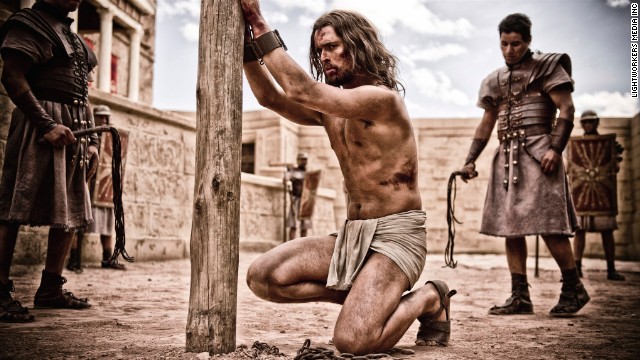 opportunity to escape his fate and even renounce his message. But he didn’t give into the temptation.
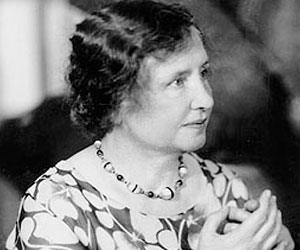 What would have happened if Helen Keller would have given into discouragement. She could not see or hear but yet she was the first person who was deaf and blind to earn a bachelors degree. And what about Ann Sullivan – the one who taught her how to read?
What would have happened if Moses would have given into discouragement? It would have  affected the history of the Jewish people who would have affected us gentiles.
What would have happened if Thomas Jefferson had given into discouragement? We might still be under the rule England.
 What would have happened if William Tyndale had given into discouragement? He translated the Bible into English, which at the time was forbidden. He believed everyone should be able to read the Bible in their native tongue, he was later arrested and executed. He literally gave his life so that you and I could have a Bible in our hand.
What would have happened if followers of Christ in the book of Acts gave into discouragement and didn’t go through all the ridicule, persecution, and opposition? I am pretty sure none of us would be sitting here.
Joseph – the guy we have been talking about the last few Sundays. Hated by his brothers. Raised in a dysfunctional home. Framed for rape. Thrown into prison and forgotten about until the Pharaoh needed his special ability that God had given him. We wouldn’t be reading his story today if he hadn’t faced those all those discouraging moments in his life.
Most of us, if not all of us, have experienced discouragement. The kind of discouragement that makes you wonder where God’s at. The kind of discouragement that makes you wonder if there is any light at the end of the tunnel. The kind of discouragement that if left unattended could destroy your faith.
Discouragement doesn’t come from God but God uses discouragement. He doesn’t stop us from being discouraged – discouragement is a part of life. Everybody faces discouragement. Some more than others. Some longer than others.
If you honestly look at it discouragement, it is a good thing. It’s no fun to go through but it is a good thing.
1. Discouragement forces us to seek God.
Think about this for a moment. In the times where we have faced the most pain, or suffered greatly, or tragedy has come into your life who do most people cry out to whether they have a relationship with God or not? God. We spend a lot of time talking to God asking, “Why?” “Where are you at?” A pastor shared a story of when a mom came into his office crying about her son running away from God. She said, I have prayed and I have prayed and I have prayed but God doesn’t seem to be doing anything. I have been seeking God. I have been asking for peace for God. The pastor simple response was, “sounds like God has your attention.”
2. Discouragement forces us to examine our life.
It is in time of discouragement that we ask the most meaningful questions in life. Questions that we need to ask our self every so often to help us keep our life in perspective. I am sure Joseph spent a lot of time examining his life. What else are you going to do in a prison cell? What else are you going to do in a cistern?
3. Discouragement forces us to make a decision.
This is true when the discouragement goes on for a really long time. Their comes a point in when you get sick and tired of being sick and tired. You get sick and tired of being discouraged and you need to do something. A man I had been mentoring for a while. Was sick and tired. His marriage was falling apart. His wife had kicked him out of house and told him to figure life out. I was with him in his most discouraging moments of his life. Like a good counselor I told him the problem with his life was not his wife and or his family. I said the problem is you. You are the one who has the problem. No matter if you get back with your wife or not it doesn’t make a difference unless you are willing to face your stuff, deal with these discouraging moments in life and grow up. He actually listened to me. He just recently Facebooked me and said he and his wife are back together and he is going into ministry. He made a decision that he was the one who needed to grow up and change. With the help of the Holy Spirit He figured it out. His discouragement with the way his life was headed forced him to make the decision to grow up and be a loving husband, a mature dad, and a godly man.
As Christ followers Paul reminds us that …
2 Corinthians 4:8-9 (NLT)
8 We are pressed on every side by troubles, but we are not crushed. We are perplexed, but not driven to despair. 9 We are hunted down, but never abandoned by God. We get knocked down, but we are not destroyed.
We might be pressed on every side by troubles – But God is not going to let you be crushed.
We might be perplexed – meaning life is confusing at times – but God is not going to let you get to the point of despair.
We might be hunted down – but God is not going to abandon us – he is with us. That’s all he promised he would do.
We might get knocked down, discouraged, but God is not going to allow us to be destroyed.
Discouragement is an opportunity to excercise our faith. We get to find out if the promises of this verse you just read are true. Without it we wouldn’t need to persevere at anything. It also turns a good story into a great story which God uses to inspire others to seek after him, go the extra mile, give generously, or inspire others to make a life decision.
As Christ followers we are expected to persevere. We are expected to use the discouraging things of life to seek the face of God, examine our life, and keep life in perspective. And when things get to tough or life is full of pain, this is the best time to exercise our faith and find out if his promises are true.
 In a survey by Discipleship Journal back in 1992, readers ranked areas of greatest spiritual challenge to them:
1. Materialism.
2. Pride.
3. Self-centeredness.
4. Laziness.
5. (Tie) Anger/Bitterness.
5. (Tie) Sexual lust.
7. Envy.
8. Gluttony.
9. Lying.
Survey respondents noted temptations were more potent when they had neglected their time with God (81 percent) and when they were physically tired (57 percent). Resisting temptation was accomplished by prayer (84 percent), avoiding compromising situations (76 percent), Bible study (66 percent), and being accountable to someone (52 percent).
Everyone knows that temptation is easy to deal with – all you have to do is “just say no”.
• Every knows that if you are a part of a bible study saying no is easy
• Every knows that if you spend countless hours in prayer saying no is easy.
• Everyone knows that if you avoid compromising situations saying no is easy.
• Everyone knows that if you have someone holding you accountable saying no is easy.
But did you also know that Pinocchio is a terrible motivational speaker? Did you also know that Kenny Rogers is terrible at playing poker? Did you also know that auctioneers make a terrible grocery clerk?
We learned last week from the three stories it was tempting for all them just to give up on life. It would have been a lot easier not to have to go through all the pain and suffering. It would have been a lot easier just to give up and not face their difficulties in life. I believe Bible study, prayer, worship, avoiding compromising situations, and having someone holding you accountable are very important in dealing with temptation.
But what do you do during the tough times? When It’s not so easy to “just say no”. It’s easier to say no when things are going well and life is good. Just like it is easier to love your friends instead of your enemies. But when the pressure is on and your life is spinning out of control – how easy is it to say no then? When tough times come your way – what are you tempted to do? When life has been unfair – what are you tempted to do? When an injustice happens to you – what are you tempted to do? What are you tempted to do you when you have a terrible, horrible, no good, very bad day?
• Some people try to medicate the pain in some way – either with food, prescription pills, TV, alcohol, sports or ______________________.
• Some people ignore the feeling. They tell themselves it doesn’t exist, it isn’t real, or doesn’t matter.
• Some feel all alone, they think everyone else is better off than they. They wallow in self-pity, and remain a victim to avoid life all together and just sleep.
• Some try to stop the sadness by becoming hard, callous, and invulnerable.
• Some take control of everything around them – work, environment, people, even God – to limit their pain.
When things are spinning out of control, or something unfair or unethical happens to you, or you are going through a horrible, terrible, no good, very bad time in your life we have a tendency to forget that God exist. When things aren’t going their way, many people have the tendency to walk away from God rather than towards them. They figure, “what the use? He doesn’t care about me anyway.”
In those times, when you are the weakest, you are tempted to do something that could worsen your circumstances or even destroy you. We are tempted to run away from God rather than run towards Him.
What we go through in life is really meant for someone else. We learned over the last couple of weeks that we are going to go through some tough things in life. Joseph went through some tough stuff. He was almost killed, sold as a slave. His brothers hated him. Joseph came from a messed up family. He had a lot of things working against him. Joseph could have very easily turned bitter towards God. He could have very easily given up on God. He could have copped the attitude, “what’s the use? He doesn’t care about me anyway!”
Then we come to this story. He had been appointed over all of Pharoah’s household. In other words the most powerful man in Egypt trusted Joseph with everything he owned. Life was looking good.
In Genesis 39:6-10 we read a story about Joseph resisting temptation.
6 So Potiphar gave Joseph complete administrative responsibility over everything he owned. With Joseph there, he didn’t worry about a thing—except what kind of food to eat! Joseph was a very handsome and well-built young man, 7 and Potiphar’s wife soon began to look at him lustfully. “Come and sleep with me,” she demanded. 8 But Joseph refused. “Look,” he told her, “my master trusts me with everything in his entire household. 9 No one here has more authority than I do. He has held back nothing from me except you, because you are his wife. How could I do such a wicked thing? It would be a great sin against God.” 10 She kept putting pressure on Joseph day after day, but he refused to sleep with her, and he kept out of her way as much as possible. 11 One day, however, no one else was around when he went in to do his work. 12 She came and grabbed him by his cloak, demanding, “Come on, sleep with me!” Joseph tore himself away, but he left his cloak in her hand as he ran from the house.
This was the start of another terrible, horrible, no good, very bad day. A day that would cost him a few years in prison. I can just imagine Joseph saying, “Again, are you kidding me?” Joseph even did the right thing. Temptation came to him – he didn’t ask for it. It was thrown in his face. Potiphar’s wife came at him day after day after day. That is the way temptation works – it comes at you day after day, after day, after day. It is relentless.
Why does God allow us to be tempted?
James 1 tells us, “And remember, when you are being tempted, do not say, “God is tempting me.” God is never tempted to do wrong, and he never tempts anyone else. “14 Temptation comes from our own desires, which entice us and drag us away.”
God doesn’t allow us to be tempted. Temptation comes from our own desires. We want to blame it on Satan. I personally think that is a spiritual cop-out. Temptation comes from you. Bad habits come from you. It is not that the temptation is strong. Whatever you are desiring is what makes it strong. Whatever you desiring is what is what entices us and drags us away.

watch this before reading it will help the ending make sense – it’s only a couple of minutes
Genesis 37 – “Here comes that dreamer!” they said to each other. “Come now, let’s kill him and throw him into one of these cisterns and say that a ferocious animal devoured him. Then we’ll see what comes of his dreams.”
23 So when Joseph came to his brothers, they stripped him of his robe—the ornate robe he was wearing— 24 and they took him and threw him into the cistern. The cistern was empty; there was no water in it.
Genesis 50 – 19 But Joseph said to them, “Don’t be afraid. Am I in the place of God? 20 You intended to harm me, but God intended it for good to accomplish what is now being done, the saving of many lives. 21 So then, don’t be afraid. I will provide for you and your children.” And he reassured them and spoke kindly to them.
Pastor, I don’t understand it. My wife and I saved ourselves for marriage. We were 27-28 when we got married. After 10 years of marriage we discovered we were unable to have children. So many couples have children out-of-wedlock and others are aborting unwanted children and we can’t have even one.”
“Pastor, my wife and I decided to apply for adoption – it was a really expensive and involved process. We trusted and prayed. After a year we were given a girl from Russia only to discover later that she had neurological problems. Her IQ will never get over 74.”
“Pastor, I thought my dad was a good dad. After 40 years of marriage he asked for a divorce. We discovered that he’d been carrying on in an affair with another woman for the past 28 years. His mistress has a lucrative trust fund available to her, she and my dad are living the high life, and my mother a good Christian woman, was left alone and rejected”
“Pastor, my mom has severe Alzheimer’s at 69 years old. My only sister lives out-of-town and doesn’t want to remember mom like this so she refuses to visit or help out. It’s causing a lot of stress in our relationship.”
There are two things you need to understand about the statements I just read.
1. They are all the same person.
2. This 45-year-old man still loves God and is coping with his situation in a remarkable way.
How do you stay faithful to God when you grow up in a family that hurts you?
How do you stay faithful to God when you are dealt an unfair hand in life?
It’s tough.
It’s tough to put your faith in God when your family has hurt you. It’ tough to stay faithful to God when you are dealt an unfair hand in life. It’s tough to trust a God whose only promise is that he will be with you. It’s tough to trust a God who is more concerned about your maturity than your safety. (James 1)
Just asked Joseph (the one who had the coat of many colors).
I have always pictured Joseph as that annoying little brother who always got his way. He got the coat of many colors. The coat demonstrated that Joseph was considered the first –born and would receive double the inheritance. What a slap in the face to his oldest brother. He was also the favorite of all his brothers. AND …. his dad, Jacob, made it known. He was the youngest and everyone knows that the youngest in the family always get what they want. On top of all his specialness – he had the ability to interpret dreams.
This family was the definition of dysfunctional family. The father’s had an obvious love for only one of his kids. He had two wives that didn’t like each other and nagged at each other. There was a sibling jealousy that caused the other 10 to plan Joseph’s death. Instead of killing him, they ended up throwing him into a pit, selling him as a slave, and staging his death to convince their dad that he was killed by a wild animal. This family is totally messed up. Wouldn’t you agree? We would be outraged if we read this story on the internet.
Despite the fact that his family was totally messed up, there are no flagrant flaws recorded against him. There are 15 chapters of Genesis devoted to the life of Joseph and not a negative thing is recorded about him. Let’s put this in perspective. The same can’t be said about the other heroes in the Bible. Noah got drunk. Abraham lied. Jacob (his dad) was deceptive. Moses killed a man, and David committed adultery.
He wasn’t perfect by any means. He is said to have been egotistical and if you read the story you could say that he flaunted his special abilities in front of his brothers. As a teen, you could define him as an obnoxious jerk. He grew up in a dysfunctional family. Counselors have defined a dysfunctional home as “one where a lot of hurt is going on that produces a lack of respect and a sense of disintegration.” A simpler definition is, “A dysfunctional home is one that isn’t functioning as God intended.” God has designed the home to be an oasis of security, love, and harmony. A dysfunctional home is a wasteland of insecurity, loneliness, and disunity.
A person who has been raised in a dysfunctional family, and in my humble opinion, has a remarkable story of not letting her past define her and at the same time using her past to help others who are walking through some of the stuff she did. Now she helps others deal with their dysfunctional families. She has her Masters from Ball State University and is a licensed therapist. Her relationship with God has played a significant role in her healing. God has sent people along her way to encourage her and help her heal. As her pastor, I have gotten to play a small role in her story. I asked Pam if I could ask her a few questions about that journey of dealing with a dysfunctional family. (I apologize. We had technical difficulties and was not able to record the interview. The following is a summary of that interview).
Q:1 What was your childhood like growing up in your home?
P: The only thing good about my childhood was that my dad and mom provided a roof over my head and put food on the table. My father was abusive. When he came home we weren’t sure what he was going to do. There were times when I would hear my mom and dad screaming. He would be hitting my mom and there were times I would step in and take the blows for her. There were times we would pack up our stuff and get ready to leave him only to realize we had nowhere else to go.
Q2: If there was one, what was the turning point for you or has it been an ongoing battle?
P: A turning point for me was when I went to college. I spent time with a counselor and she help me realize that I can’t change my past and I can’t save my brothers or my mom and dad. I accepted it and became a psych major and I also got my masters so that I could help other kids that are walking through the same thing I did. It is also an ongoing battle. But … I have matured and my past doesn’t control me as much as it did. It’s getting better.
Q3: How have the things you walked through in your life help you mature emotionally and spiritually?
P: I had to face them or they would control me the rest of my life.
Q4: What sustains you? Why do you keep seeking after God despite all the things you have walked through?
P: I learned that I can use the things I have walked through to help others. I want to give hope to kids and let them know there is a better way. God has brought people along my path who have given me hope. They have given me reason to live. God has played a significant role in providing the right people at the right time.
What Pam’s story teaches is despite the dysfunction in her family, despite the unfair things that happened  to her over the years, God can turn a sad story to a story with meaning. God can turn what was meant for evil into something good. Joseph, too, grew up in a waste land of insecurity, loneliness, and disunity. But yet, at the end of the story he is promoted to second in command of the most powerful nation of his day – Egypt. He was the Abraham Lincoln of the OT. He kept the nation together and it prospered under his leadership.
Before he was second in command, Joseph continued to experience hardships after he was sold into slavery by his brothers. In one day he went from favored son to lowly slave. From sleeping on a feathery mattress to sleeping on a stone floor. He life was turned upside down. He was framed for rape. He was unjustly thrown into prison.
There is no possible way Joseph could have understood. There wasn’t a Gideon Bible he could read to find out the end of his story. There is no possible way we can understand why we were brought up in the families that we were brought up in or why the hand in life we have been dealt with is unfair. We can’t control who are parents are. We can’t control the unfair things we walk through in life. We can’t control what happened to us in the past.
Joseph couldn’t control what happened to him either. I can’t imagine the discouragement and doubt that he walked through. But when you look at Genesis 39:2 you learn “the Lord was with Joseph and he prospered.”
God is not out to destroy us. God is not out to make our life a disaster.
What exactly is God up to?
Jeremiah 29:11-13 (NLT)
11 For I know the plans I have for you,” says the Lord. “They are plans for good and not for disaster, to give you a future and a hope. 12 In those days when you pray, I will listen. 13 If you look for me wholeheartedly, you will find me.
1. He knows exactly what’s going on in your life. He makes His business to get to know you intimately. God is not surprised by anything. He knows the plans he has for you. Whatever you are walking through, if you trust him, they are for your good. What you are going through God’s plan is not to destroy you. We don’t understand the things we are going through while we are going through them but if you look back at the things you have walked through in life I believe they busted your self-centered bubble and caused you to mature.
You only find what you are desiring to find. John 3:30 reminds us that He must become greater and we must become less. We seem to have to go through all these other things we desire before we realize we have been desiring him all along. Only he can give the peace we are looking for. Only he can give the joy we are looking for. Only he can give the courage you are looking for. When you desire Him more than he answer your prayer. When you desire him more than getting out of the circumstance you are in – that’s how you know He is becoming greater.
2. He’s waiting for you to look for him wholeheartedly. Because when you do you will find  him.
him.
When you need him – actually need him – only then will he become greater. If you look closely at the stories I shared with you this morning. In each case, God never left them and he gave each a hope and a future. Not the perfect life and complete understanding. But he has done what is perfect for each one of them.
How do you know if you have found him? You know he is with you no matter what happens in your life. This is not an intellectual understanding. This is an understanding that comes from being a relationship with him.You can look at what’s going in your life and honestly say, “everything is going to be alright” – this too shall pass. His Spirit gives you a quiet confidence to face life circumstances rather than fake life circumstances.
 I am confident that God uses every moment, whether good or bad – but especially those bad moments in our life when we don’t understand why we are going through what we are going through and uses them the same way He has used in the man’s life I mentioned at the beginning. He uses them the same he has used them in Pam’s and Joseph’s life. God uses every moment we don’t understand to grow us up. Why? Because that is when we realize we need Him more than what we are actually desiring.
His plan is turn your hopelessness into hope. Your desperation into devotion. Your selfishness into servanthood. If your story were to end today – would you be content with God alone?
You’ve grown up when you are content with God alone. 

The author Philip Yancey writes of being contacted by a television producer after the death of Princess Diana to appear on a show and explain how God could have possibly allowed such a tragic accident. “Could it have had something to do with a drunk driver going 90 miles an hour in a narrow tunnel?, he asked the producer. ‘How, exactly, was God involved?'”
Ray ‘Boom Boom’ Mancini killed a Korean boxer in a match, the athlete said in a press conference, “Sometimes I wonder why God does the things He does.”
In a letter to a Christian family therapist, a young woman told of dating a man and becoming pregnant. She wanted to know why God allowed that to happen to her.
In her official confession, when South Carolina mother Susan Smith pushed her two sons into a lake to drown, she said that as she did it, she went running after the car as it sped down the ramp screaming, “Oh God! Oh God, no! Why did You let this happen!”
Then things like 911, the Sandy Hook Elementary massacre, the Columbine massacre, OKC bombing happen. Then just a few blocks away from us, a couple of years ago, an 8th grade girl takes her life by hanging herself, and a woman gets raped just 12 blocks away from us.
What role did God play exactly? This I know ….
- God didn’t tell the guys to ram the trade towers
- God didn’t send that man to Sandy Hook Elementary to massacre them.
- God didn’t send those two teenage boys into Columbine high school to massacre all of those other teenagers.
- God didn’t send that bomb to blow up that building in OKC.
- God didn’t tell that 8th grade girl to kill herself.
- God didn’t tell that man to rape that woman on 38th st.
We ask the questions why did God allow these things to happen. Why didn’t He do anything to stop innocent people from dying? Where was God when all this stuff happened? Why does God allow his people to go through so much pain and suffering. Mother Theresa once quipped, “Lord, if this is the way you treat your friends, it’s no wonder you don’t have many.”
What we see as unjustified pain often shakes our faith because we can’t explain its source or understand it’s purposes. Plus you have the skeptics in the background are saying, “Either God is all-powerful or He doesn’t care.”
Why does God allow us to suffer?
Does God allow us to suffer to punish us for our sins? Sometimes that can be the case. Moses wasn’t permitted to enter the Promised land because he lost his temper. Miriam was temporarily struck with leprosy because she under-minded Moses’ leadership. Herod was eaten with worms and died because he assumed glory that belonged to God. So yeah ….. occasionally we experience God’s painful rod of correction. Hebrews 12 teaches us that God disciplines us as a father disciplines his children.
Does God allow to suffer because of our own stupid mistakes? Yes. We smoked for years and now suffer with cancer. We were promiscuous and contracted venereal disease. We neglected to study and we failed. The Bible says, “you may be sure that your sin will find you out.”
Does God allow us to suffer because of a satanic attack? It does happen … but it is rare. Satan attacked Job and he lost everything. The Apostle Paul had a thorn in his side.
Does God allow us to suffer because we live in the wake of other people’s sins? Yes. A drunk driver slams into our car; our parents get a divorce; our kids rebel. The scriptures teach us the sins of the father are visited on the 3rd and 4th generation. A little baby is born with an addiction to drugs because the mother was on cocaine. That’s not the baby’s fault or is it God’s fault. It’s just that we reap the consequences of the sins of others.
Does God allow us to suffer because of persecution? Ask Saeed Abidinni(look at 2 Timothy 3:12).
 Sometimes suffering is just the result of living in a fallen world.
Even if we can identify the source of suffering, it still doesn’t answer the question why God permits it.
Then there are times when God does intervene and spares people’s suffering.
There is the story of the youth group who was coming home from a youth event when a devastating tornado ripped through Joplin, Mo. On May 22nd, 2011. Torrential rain and hail storm blocked their vision and suddenly a large tree came crashing down right in front of them. They stopped just inches from the large tree. They got out, ran to the nearest house and a stranger let them into their basement. They learned later that if they would have traveled another 100 yards beyond the fallen tree they would have been directly in the path of half-mile wide, F5 tornado that killed 161 people.
There’s also my story of a drunk driver coming straight towards me on a two lane county road. The man was going excessively over the speed limit. I can still remember thinking, “I have nowhere to go”, “this is the end of my life.” “I hope my wife and kids know how much I love them.” At literally the last-minute, he swerved to the left. I watched in my rear view mirror the car go air born and flip over 3 three before crashing through a fence. I remember thinking afterwards, “did God just spare my life?”
What role did God play exactly? God plays whatever role He likes.
Ecclesiastes 9:1,2 reminds us, “even though the actions of the godly and wise people are in God’s hands, no one knows whether God will s how them favor. 2 The same destiny ultimately awaits everyone, whether righteous or wicked, good or bad, ceremonially clean or unclean, religious or irreligious. Good people receive the same treatment as sinners, and people who make promises to God are treated like people who don’t.
Tragedy and suffering finds us all!
And the sad truth is God doesn’t always choose to intervene.
Why my life and the life of the youth were spared and other’s died? Well …. There is no easy answer. It would be self-righteous of me to even try to answer such a question. There are people who are more smarter than me who can’t answer such the question.
 There is a simple analogy that may give some insight. Why does a father take the training wheels off his child’s bicycle? The father knows his action will produce some suffering. An accident is inevitable. There will probably be some painful scrapes, some blood, and more than likely a lot of tears. But the father removes the training wheels and anxiously watches from the distance because he loves the child and knows the risk, adventure, and freedom are the sources of the most fulfilling life.
If the father is overly protective, the child would never experience the thrill of the wind in his face, riding training –wheel free down the sidewalk. In fact, if the fathers’ main objective was protection, his child would never be permitted to play sports, drive a car, date the opposite sex, get married, or have a child.
Isn’t that right parents? If your goal is to protect your kids all their life and bail them out when they get in tough situations, you and I both know they will never grow up. In my 17 years of youth ministry, I learned the kids who were forced to face life’s difficult circumstances at an early age were far more mature than the kids who had it easy.
The same is true spiritually. The risk of pain and failure contribute significantly to our maturity and fulfillment.
God did not design us to be puppets on a string. We are free human beings created in the image of God and we are given the privilege of living in a fallen world. As free human beings we are going to fall, face temptation, experience tragedy, and experience pain. Along the way we might be fortunate enough to find God’s favor. Ask anyone who has lived 60-70 plus years.
Pain, suffering, and tragedies force you to grow up. God doesn’t prevent pain, suffering and tragedies nor does he cause them. God doesn’t stop disease from coming into the world nor does he it. God doesn’t stop the terrorists of the world from doing their evil acts nor does tell them to stop.
God does use them. These kinds of things force us to mature and burst our self-centered worlds.
Everything we walk through in life. Everything we experience in life is meant for someone else. Look at the scriptures. Look at Jesus. He didn’t suffer and die for himself. He suffered and died for you and I. When you read the scriptures you are reading about what they went through and how they handle their trials and tribulations. They went through all that for you and I. That pattern continues. The tragedies that you go through. The pain you walk through. The suffering you experience isn’t for you. You are going through it for someone else.
If he doesn’t prevent pain and suffering and tragedy – what exactly is God doing? What exactly is God’s role?
Hebrews 13:5 tells us, “I will never fail you or abandon you.”
His role: Being with you. Just like he was with Abraham, Isaac, Jacob, the disciples and the countless billions who have gone before us. The good news for those who follow Christ that no matter what suffering looms in your future, the One who has all the power and authority over the universe will not let you walk through the darkness alone. King David wrote in Psalm 23, “though I walk through the valley of the shadow, I will fear no evil. Why? Because he is with me.”
What else is God doing?
James 1:2-4 tells us, “ when troubles of any kind come your way, consider it an opportunity for great joy. 3 For you know that when your faith is tested, your endurance has a chance to grow. 4 So let it grow, for when your endurance is fully developed, you will be perfect and complete, needing nothing.
God doesn’t exempt us from pain, tragedy, and suffering. His goal for our lives is not our safety but our maturity. When troubles come – it is an opportunity for great joy. Most people look at pain, tragedy and suffering as something terrible. God tells us to trust that the pain is causing you to grow up. God tells us to trust the tragedy we are walking through to cause us to grow up. God tells to trust the suffering that you are walking through because it is going to cause you to grow up.
So what exactly is God’s role? To perfect and complete you until you desire nothing and need nothing but Him. Only he can meet your deepest need. Every trial, every tragedy, every suffering, and every test you walk through is an opportunity for you to grow up. These things in your life help him become greater and you become less. (John 3:30)
So what if He never does anything for me. He doesn’t take away my disease. He doesn’t heal me. He doesn’t find favor on me to make everything alright? Revelation 21:4 says, “he will wipe away every tear from their eyes. There will be no more death or mourning or crying or pain, for the old order of things has passed away. Heaven is a divine promise from God. God is going to give us new, glorified bodies. We’ll be free from pain; there will be no more tears, no more diseases.
When you are walking through tragedy, enduring pain, or you are searching for answers to your why questions. Remember these two words:
Time – God makes all things beautiful in his time. With God a 1000 years is as a day and a day is a 1000 years. But he promises one day the sufferings of this present world will seem but a moment in the light eternity. Be willing to wait on the Lord.
Trust – John 14:2 teaches us, “to not let your heart be troubled, trust in God, trust also in me,
Trust in tragedy
Trust in suffering
Trust in pain.
Sometimes we can’t understand or can’t see any victory or reason for the pain and suffering we are experiencing. If you knew exactly the source and purpose of suffering and you could see the end result. It wouldn’t take much faith to get through it.
Trust Him.
 We spent a week caring for the people of Marion in a tangible way. We took this week in the fall to serve our mission agencies and the people of Marion. When you watch the four minute video you will discover that we painted, we canvassed, we threw a block party, and served at our local mission agency. We are intentionally connecting with your community to show them we care in a tangible way. Click here to watch the video.
 mondayschoolblog